

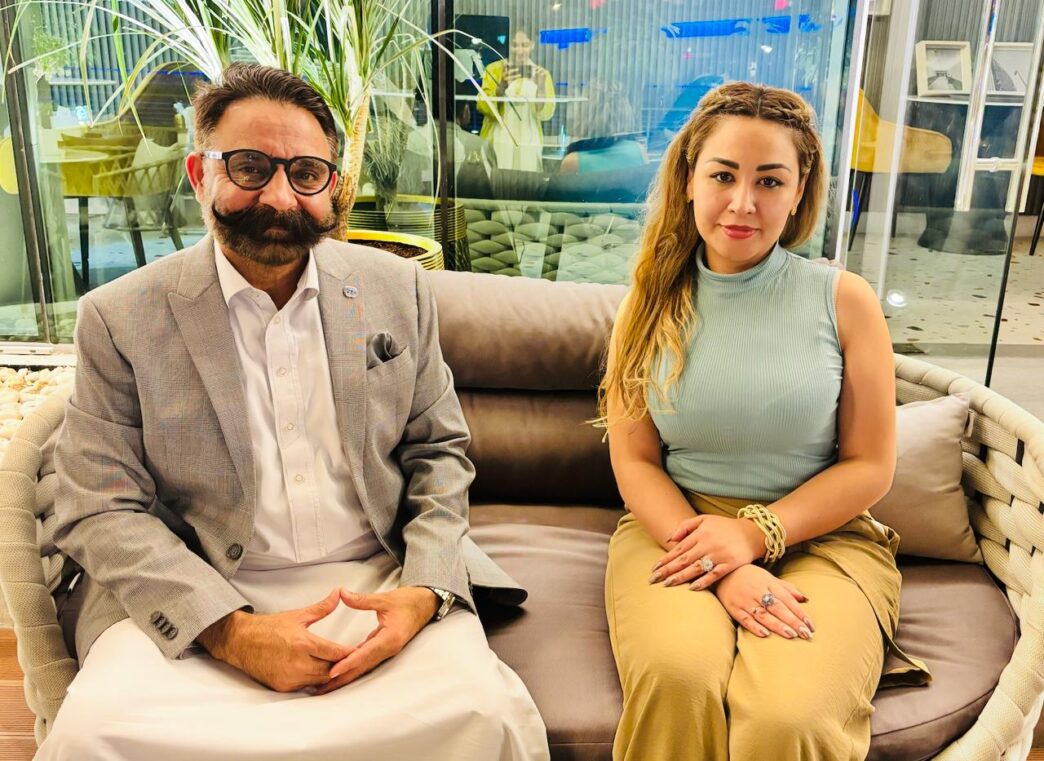
In a recent insightful dialogue, Dr. MAC Munir Ahmad Chaudhry, Group CEO of Al Maktoum Holding Group, and esteemed researcher Ms. Maria Jose Peralta Siles explored the critical convergence of corporate communications and strategic economic management. Their discussion underscored how these two disciplines are no longer separate functions but integrated pillars defining the strength and long-term viability of modern institutions. The consensus was clear: in today’s intricate global landscape, true leadership transcends mere financial capital, relying instead on transparent communication, strategic foresight, and the seamless alignment of vision with execution.
Dr. Chaudhry emphasized that corporate communication extends far beyond traditional public relations. It is the deliberate architecture of institutional power, strategically weaving together narrative, reputation, policy direction, and stakeholder trust. For both sovereign entities and corporations, effective communication profoundly influences market dynamics, investor confidence, regulatory perceptions, and the formation of international partnerships. The discussion highlighted the multifaceted nature of this discipline, encompassing internal governance messaging, financial transparency for investors, diplomatic outreach, robust crisis communication frameworks, and strategic brand positioning. Institutions that underestimate the power of communication risk instability, while those that master it gain significant authority and influence. As Ms. Peralta Siles’ research insights revealed, transparency and structured messaging, informed by behavioral economics, directly contribute to economic stability by reducing volatility and fostering stakeholder loyalty. This proactive approach to communication, rather than reactive, demands a clear economic narrative, consistent messaging across all platforms, and leadership voices aligned with long-term objectives, thereby safeguarding reputation as a strategic asset in the global arena where credibility is currency.
While communication shapes perception, strategic economic management actively molds reality. The conversation transitioned to the art of long-term economic governance, focusing on the judicious management of capital, risk mitigation, policy alignment, and expansion within an increasingly volatile global system. Effective strategic economic management necessitates comprehensive capital allocation planning, the development of diversified economic ecosystems, sustainable investment frameworks, rigorous risk modeling and scenario analysis, and a keen alignment with evolving global macroeconomic trends. This approach moves beyond merely reacting to immediate pressures, instead proactively engineering stability through multi-layered foresight. The imperative for structured economic discipline is particularly pronounced given contemporary challenges such as green transitions, fintech innovation, digital transformation, and geopolitical shifts. The experts agreed that economic leadership requires generational thinking, not just quarterly considerations. The integration of research-based insights with executive authority is paramount, as strategy without data remains speculative, and data without execution leads to unfulfilled potential.
The engagement between Dr. Chaudhry and Ms. Peralta Siles notably highlighted the crucial integration of academic research with executive decision-making. Ms. Peralta Siles presented analytical frameworks that clearly demonstrated the direct correlation between communication transparency and economic resilience. Such data-driven strategies are instrumental in reducing uncertainty and bolstering policy credibility. This collaborative approach reaffirmed that sustainable institutions are fundamentally built upon intellectual collaboration, structured governance, ethical economic positioning, and robust global partnership models.
The United Arab Emirates stands as a compelling example of this integrated philosophy in practice. The nation's remarkable economic transformation serves as a living testament to how aligned communication, disciplined strategy, and visionary leadership can collectively redefine a country's global standing. The UAE’s diversified economic structure, innovation-driven agenda, and extensive global partnerships exemplify the synergistic relationship required between corporate communications and strategic economic management. This model demonstrates that visionary economies are conceived and built twice: first through a clear vision, and then through meticulous execution.
In conclusion, the dialogue between Dr. MAC Munir Ahmad Chaudhry and Ms. Maria Jose Peralta Siles underscored a fundamental truth: robust institutions are forged through structured communication and disciplined economic management. In an era defined by complexity and rapid change, those leaders and organizations that master these two interconnected disciplines will be best positioned to lead with stability, credibility, and enduring influence. Leadership, in this context, is not measured by the sheer volume of authority, but by the unwavering clarity of its direction.