
Speculative interest in crude oil futures and options has surged, with hedge funds increasing their net long positions to levels not seen in nearly a year. This notable shift, recorded across major exchanges, reflects a growing conviction among institutional investors that oil prices are poised for further ascent. The primary catalyst driving this bullish sentiment appears to be the escalating geopolitical tensions centered around Iran, a key player in the global energy landscape. Analysts point to the inherent volatility that regional instability introduces into supply chains, prompting a reassessment of risk premiums in the market.
The latest Commitment of Traders data, released by the Commodity Futures Trading Commission, illustrates this trend clearly. Money managers added significantly to their long contracts for both WTI and Brent crude, while simultaneously reducing short positions. This dual action signals a strong directional bet, suggesting that many believe the downside risk is diminishing relative to the potential for price appreciation. Such concentrated positioning often precedes significant market movements, though it also raises questions about potential overcrowding and subsequent sharp reversals if geopolitical factors stabilize unexpectedly.
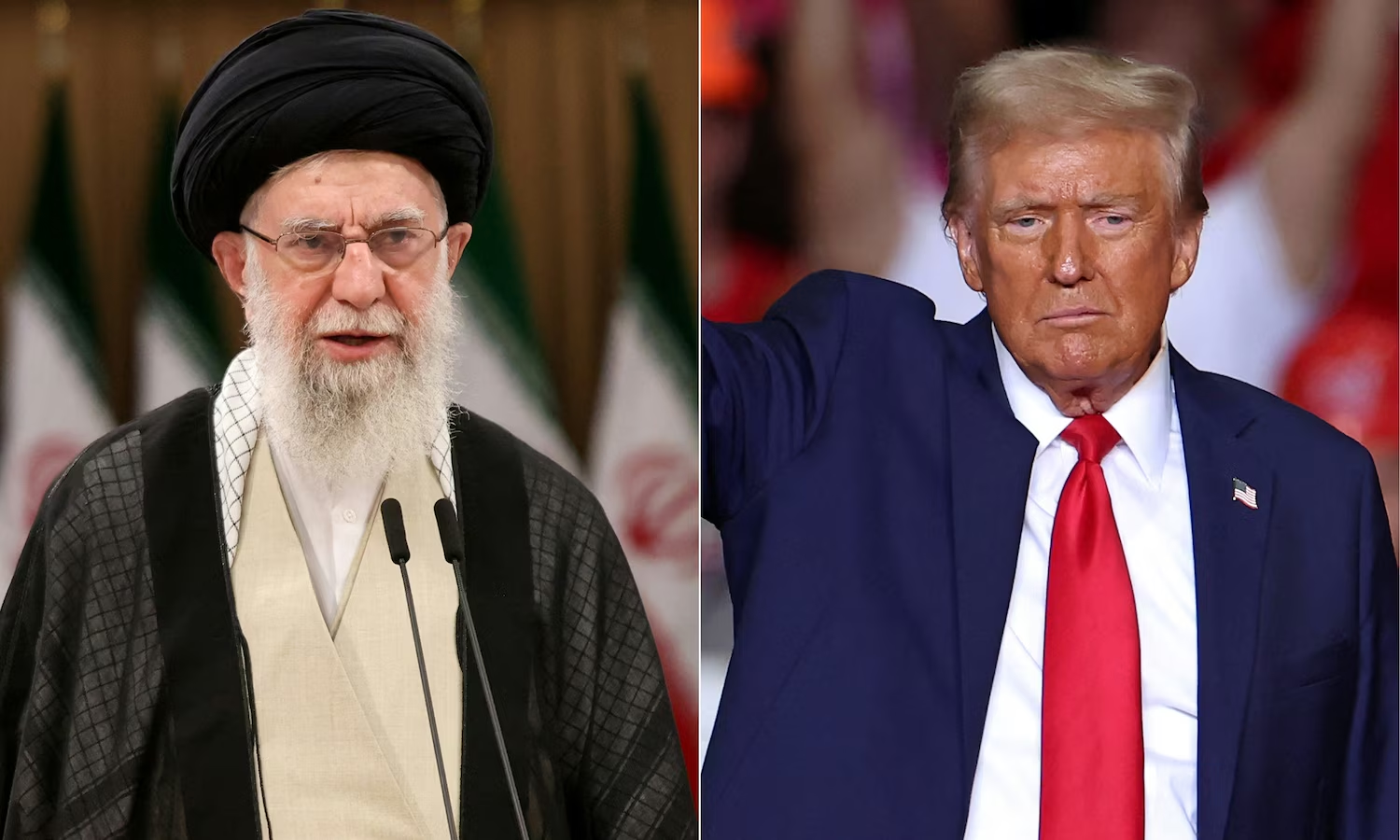
Concerns regarding Iran’s nuclear program and its broader influence in the Middle East have long been a source of anxiety for oil traders. Recent developments, including renewed rhetoric and reported incidents in vital shipping lanes, have amplified these fears. The Strait of Hormuz, a narrow chokepoint through which a substantial portion of the world’s seaborne oil passes, remains a focal point. Any perceived threat to free passage through this waterway inevitably sends ripples through the market, as interruptions could severely constrain global supply, even if only temporarily.
Beyond the immediate geopolitical concerns, underlying supply and demand fundamentals also play a role in shaping investor outlook. While global economic growth projections remain somewhat mixed, particularly in major consuming nations, the narrative of a tightening market persists. OPEC+ production cuts, coupled with steady, albeit not explosive, demand recovery in certain sectors, contribute to this perception. However, it is the acute sensitivity to supply disruptions, particularly those emanating from the Middle East, that appears to be the dominant factor influencing the current wave of bullish bets.
The current accumulation of long positions by hedge funds marks a significant departure from earlier periods of more conservative or even bearish sentiment. For much of the past year, investors have grappled with concerns over a potential global economic slowdown and its impact on oil consumption. The pivot towards a more aggressive bullish stance underscores a recalibration of risk assessment, where the immediate threat of supply disruption from geopolitical flashpoints like Iran now outweighs broader macroeconomic uncertainties in the minds of many sophisticated traders. This dynamic creates a market environment where prices are highly reactive to headlines and diplomatic maneuvers, adding another layer of complexity for consumers and policymakers alike.