
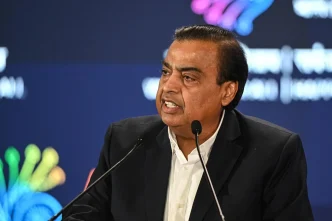
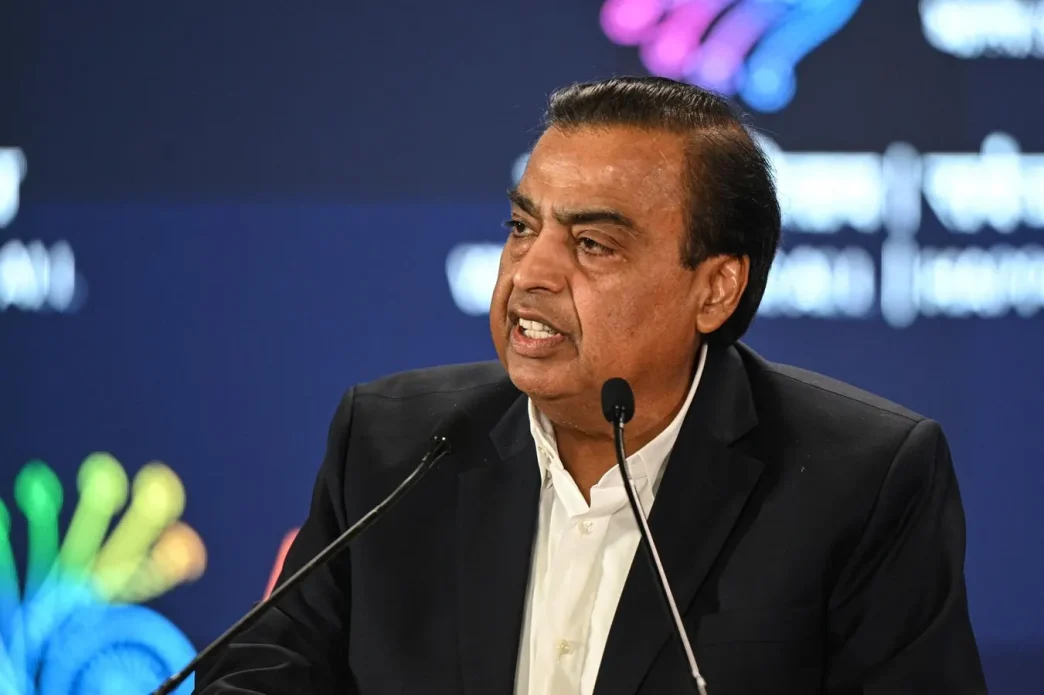
Reliance Industries, the sprawling conglomerate led by Mukesh Ambani, reported a net profit of 189.51 billion rupees ($2.27 billion) for the quarter ending March 31, a figure that surpassed analyst expectations despite a complex global energy landscape marked by ongoing tensions related to the Iran conflict. This robust performance underscores the diverse revenue streams and operational resilience that have become hallmarks of the Mumbai-based giant, particularly within its dominant oil-to-chemicals (O2C) and consumer-facing businesses. The company’s ability to navigate volatile crude prices and geopolitical uncertainties suggests a strategic agility that continues to impress investors.
The O2C segment, historically the bedrock of Reliance’s earnings, saw improved margins, benefiting from strong demand for refined products and petrochemicals. While the broader market grappled with fluctuating oil supplies and the ripple effects of the Iran situation on shipping routes and insurance costs, Reliance’s integrated refining and petrochemical complex at Jamnagar, one of the largest in the world, demonstrated its capacity for efficient operation and feedstock flexibility. This allowed the company to optimize its product mix and capture value even amidst the uncertainties that have plagued global energy markets. The conflict in the Middle East has, at various points, threatened to disrupt critical shipping lanes and influence crude benchmarks, yet Reliance managed to mitigate these external pressures effectively.
Beyond its traditional energy stronghold, Reliance Jio Infocomm, the company’s telecommunications arm, continued its aggressive subscriber growth trajectory, adding millions of new users during the period. The digital services division, including Jio and its retail counterpart, Reliance Retail, are increasingly contributing to the overall profitability, diversifying the company’s risk profile away from its historical reliance on energy. Reliance Retail, with its extensive network of stores across various formats, also posted strong numbers, reflecting robust consumer spending in India and the company’s expanding footprint in both online and offline commerce. These consumer-centric businesses have become critical growth engines, providing a valuable counter-balance to the cyclical nature of the O2C segment.
Analysts had largely anticipated a strong showing, but the degree to which Reliance managed to outstrip consensus estimates points to a more efficient capital allocation and operational execution than previously modeled. The firm’s continuous investment in technology upgrades across its various segments, from refining processes to digital infrastructure, appears to be yielding tangible benefits. Mukesh Ambani has consistently emphasized a forward-looking strategy, pivoting towards renewable energy and digital transformation, which are now beginning to materially impact the company’s financial health. This strategic foresight has positioned Reliance to capitalize on emerging market trends while buffering against traditional industry headwinds.
Looking ahead, the geopolitical situation, particularly concerning Iran, remains a significant variable for global energy markets, and by extension, for Reliance’s O2C division. However, the company’s demonstrated ability to adapt to such challenges, coupled with the accelerating growth of its consumer businesses, suggests a degree of insulation. The ongoing expansion of its clean energy initiatives, including ambitious plans for giga factories producing solar panels, batteries, and hydrogen, also points toward a future where Reliance aims to be less susceptible to the vagaries of fossil fuel markets. This strategic shift is not just about environmental responsibility but also about building long-term, sustainable value for shareholders.