
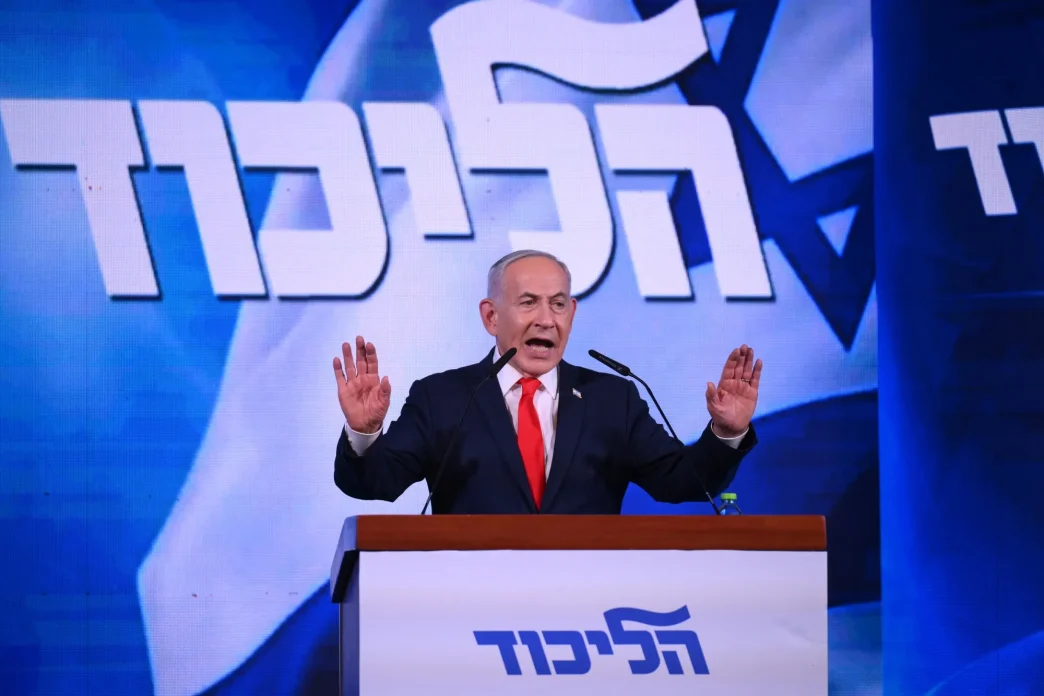
Israel’s election has produced no clear winner, with Prime Minister Benjamin Netanyahu’s right-wing religious alliance narrowly edging ahead of Gadi Eisenkot’s opposition bloc in a vote count tight enough that neither side can yet claim a path to governing on its own.
With almost 93% of votes counted by Wednesday afternoon, Netanyahu’s alliance was projected to win 53 seats in the 120-member Knesset, ahead of a below-expectations 48 for Eisenkot’s bloc. Both totals fall well short of the 61 seats needed to form a government outright, leaving the outcome dependent on coalition negotiations rather than the vote count alone.
The decisive factor neither camp anticipated was a surge in Arab turnout. Israel’s two Arab parties nearly doubled their projected seat count to 19, positioning them as potential kingmakers in whatever coalition talks follow, a role neither has typically occupied at this scale in past Israeli elections.
Both leaders have already signaled they intend to try to form the next government, setting up a negotiating period that will likely determine Israel's political direction more than the election night results themselves. With the religious and right-wing bloc and Eisenkot's opposition both short of a majority, the parties holding the balance, including the newly strengthened Arab factions, gain outsized leverage in deciding who ultimately governs.
Markets registered the uncertainty quickly. Israeli bonds and the shekel both fell as the deadlocked result became clear, a reaction consistent with investors pricing in a longer, less predictable path to a stable government rather than a swift resolution.
What happens next will hinge on which smaller parties are willing to join which bloc, and on what terms. With no majority in hand for either Netanyahu or Eisenkot, Israel is heading into a coalition-building period where the final government could look meaningfully different from what either leader's election-night numbers alone would suggest.