
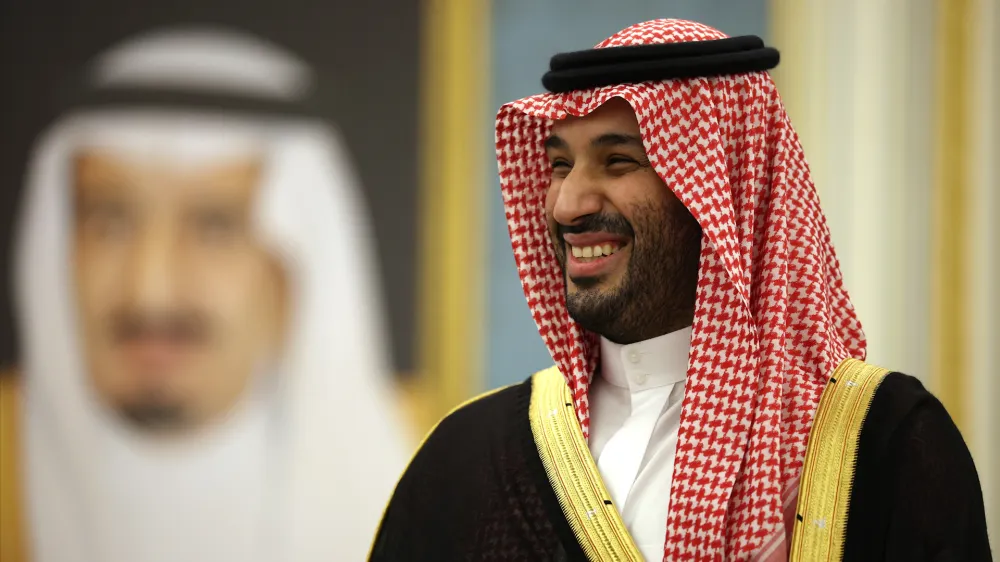
Just three years ago, the notion of Mohammed bin Salman, Saudi Arabia’s de facto leader, receiving a warm welcome in the Oval Office seemed a distant fantasy. President Joe Biden had famously vowed to treat him as a pariah, even scrutinizing long-standing arms deals. Yet, recently, the Crown Prince strode into the White House, not as a penitent, but as a power player, securing a sweeping array of concessions from a Trump administration eager to deepen ties. The shift is stark, signaling a remarkable rehabilitation and, more significantly, a fundamental recalibration of Washington’s priorities in the Middle East.
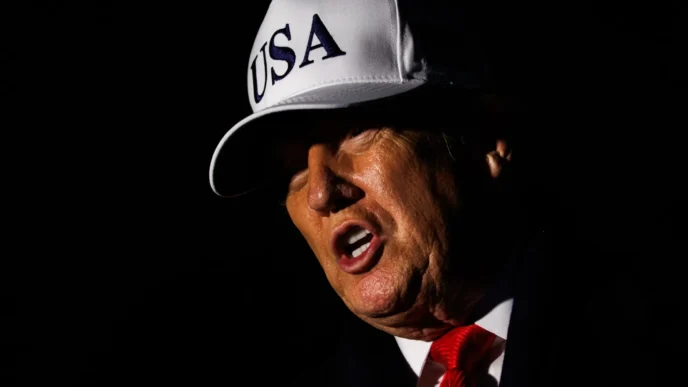
The theatrics of the Oval Office, where former President Donald Trump chastised a reporter for questioning bin Salman about the murder of Jamal Khashoggi, merely underscored the broader narrative. Beyond the public display, the substance of the agreements tells a more profound story: Riyadh secured an almost complete wish list, cementing its strategic importance to the United States. Perhaps the most striking departure from previous U.S. policy was the apparent decoupling of Saudi normalization with Israel from any comprehensive defense and trade package. For years, the Biden administration insisted these elements, alongside a pathway to a Palestinian state, must advance in lockstep. With Israel’s steadfast rejection of a Palestinian state and Saudi Arabia’s refusal to concede its position, that framework had stalled. Now, Trump has essentially handed Riyadh the keys to significant defense and economic agreements, effectively sidelining the Israeli component.
This strategic pivot saw Saudi Arabia designated a Major Non-NATO Ally, a significant boost to its geopolitical standing. Plans are also moving forward to sell F-35 jets to the Kingdom, a deal once considered highly controversial due to its potential impact on Israel’s qualitative military edge. A new Strategic Defense Agreement further solidifies the military partnership. Economically, the collaboration is equally ambitious, with a new AI cooperation framework, including the clearance for advanced chip sales, a critical minerals agreement, and an opening for expanded nuclear energy cooperation. While the U.S. remains wary of granting Riyadh a green light for domestic uranium enrichment, citing proliferation concerns, the broader scope of cooperation signals a monumental shift in technological and economic alignment.
Bin Salman’s adept navigation of great power rivalries has clearly paid dividends. While Washington has historically been Riyadh’s primary security guarantor, Saudi Arabia has increasingly signaled its willingness to diversify its partnerships, including with China and Pakistan, if its security needs are not met by the U.S. The 2023 rapprochement between Saudi Arabia and Iran, brokered in Beijing, served as a potent reminder of this hedging strategy. Riyadh’s recent mutual defense agreement with Pakistan, a nuclear-armed Muslim ally, further underscores its proactive pursuit of non-U.S. security guarantees. This strategic maneuvering has not gone unnoticed in Washington, where figures like Republican Representative Michael McCaul view a strengthened U.S.-Saudi alliance as crucial to countering China’s growing influence.
Despite receiving nearly everything on its agenda, two significant items remained just beyond Riyadh’s grasp: a formal, Senate-ratified defense commitment akin to NATO’s Article 5, and explicit approval for domestic uranium enrichment. While the Trump administration’s statements did not include an obligation to defend the Kingdom, a senior Saudi source indicated that Riyadh seeks a permanent agreement extending beyond any single presidency, requiring Congressional approval. Such a pact, as analysts like Aaron David Miller of the Carnegie Endowment suggest, could lock Saudi Arabia into a pro-American alignment for decades, deterring potential adversaries and boxing out competitors like Russia and China. Yet, the reluctance to offer such a deep security guarantee, last seen with the 1960 US-Japan treaty, highlights the lingering complexities in the relationship.
The Eurasia Group think tank recently observed that the U.S.-Saudi relationship is now driven more by great power competition than by the elusive goal of normalization with Israel. With Saudi public sentiment towards Israel increasingly negative and many of its strategic objectives from Washington now secured, Riyadh’s calculus has undoubtedly shifted. In the Oval Office, Trump acknowledged a “positive response” from bin Salman regarding normalization with Israel, but notably refrained from using the word “commitment.” This nuanced phrasing encapsulates the new reality: Saudi Arabia has largely achieved its aims, reshaping its alliance with Washington on its own terms, and leaving the Israeli question to a more opportune, or perhaps, entirely separate, moment.