
The operations of several international humanitarian organizations, including Doctors Without Borders (MSF), face suspension in Gaza starting Thursday, a development that has prompted a stark warning from ten nations about a “renewed deterioration” of the already dire situation. This move by Israel requires aid groups to renew their registration and provide personal details of their staff, a mandate many agencies have resisted citing safety concerns for their employees in the conflict zone. The United Nations’ human rights chief, Volker Türk, has condemned the suspensions as “outrageous,” characterizing them as part of a pattern of “unlawful restrictions on humanitarian access.”
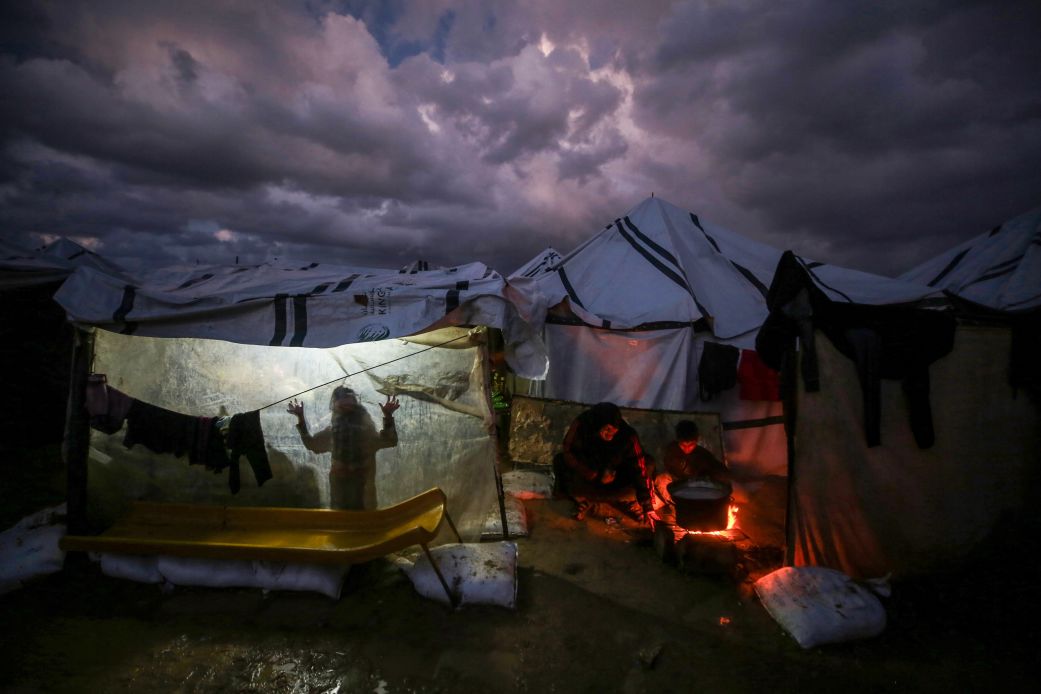
Gaza, already ravaged by conflict, is now enduring the brutal realities of winter. Heavy rainfall and plummeting temperatures have exacerbated the humanitarian crisis, destroying the flimsy makeshift shelters many Palestinians rely on for survival. The Hamas-run Government Media Office in Gaza reports at least 20 fatalities from building collapses as residents sought refuge from the severe weather. Foreign ministers from Canada, the United Kingdom, Denmark, Finland, France, Iceland, Japan, Norway, Sweden, and Switzerland collectively noted the “appalling conditions” civilians are facing as winter progresses.
Relief groups have vocalized serious apprehension, stating that the suspension of operations for more than two dozen aid organizations will inevitably lead to increased illness and preventable deaths among the Palestinian population. Refugees International, for instance, called the decision a “pretext to further restrict aid to Gaza while silencing independent aid organizations.” The European Union also weighed in, with humanitarian chief Hadja Lahbib stating that the new registration rules, if implemented in their current form, would block “life-saving aid” from reaching those in need and urged that “all barriers to humanitarian access must be lifted.”
Israel maintains that these registration rules are a necessary measure to prevent Hamas from exploiting international aid, a claim that both the UN and various aid groups have consistently rejected. A US government review earlier this year found no evidence of widespread theft by Hamas, contradicting assertions made by both Israel and the US State Department. The Israeli foreign ministry, however, insists the requirement aims to prevent the involvement of “terrorist elements” and safeguard the integrity of humanitarian efforts, citing “past cases” without further elaboration.
The Coordination of Government Activities in the Territories (COGAT), the Israeli agency responsible for facilitating aid distribution, stated that MSF, a major medical presence in Gaza, “chose not to cooperate with the registration process.” MSF, however, countered this assertion, stating they have been “fully engaged since July 2025” and have submitted most of the requested information, continuing to seek dialogue with Israeli authorities. The medical charity warned that losing access would be a “disaster for Palestinians,” potentially impacting nearly half a million people who rely on their support for critical medical care, water, and other essential services.
Aid agencies have widely expressed reservations about the new requirements. The Humanitarian Country Team of the Occupied Palestinian Territory, a forum encompassing UN agencies and over 200 local and international organizations, described the system as relying on “vague, arbitrary, and highly politicized criteria.” Oxfam specifically raised concerns in May about the demand for staff lists and personal information, including details about families, noting that such requirements raise “serious protection concerns” for humanitarian workers who are already vulnerable to harassment and attacks.
Despite COGAT’s claim that the suspensions would not harm the volume of humanitarian aid entering Gaza, a consortium of over 40 organizations, including MSF and Oxfam, reported in October that Israel had continued to “arbitrarily reject shipments of life-saving assistance” since a previous ceasefire. This included urgent deliveries of water, food, tents, and medical supplies, often on the grounds that organizations were “not authorized” to deliver aid. The current crisis unfolds as Israeli Prime Minister Benjamin Netanyahu visited the United States, meeting with President Donald Trump, while Hamas reiterated its rejection of disarmament calls, asserting its right to self-defense.