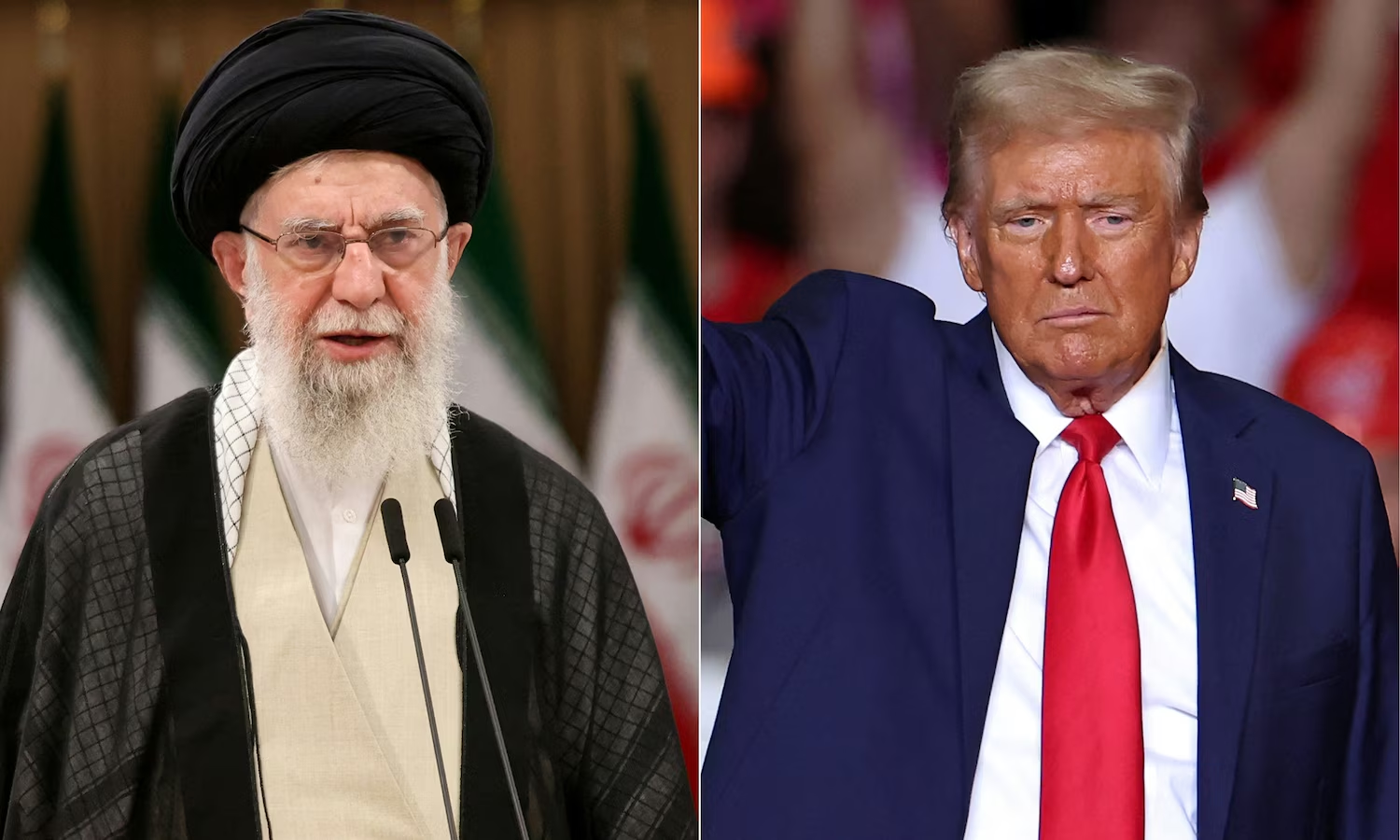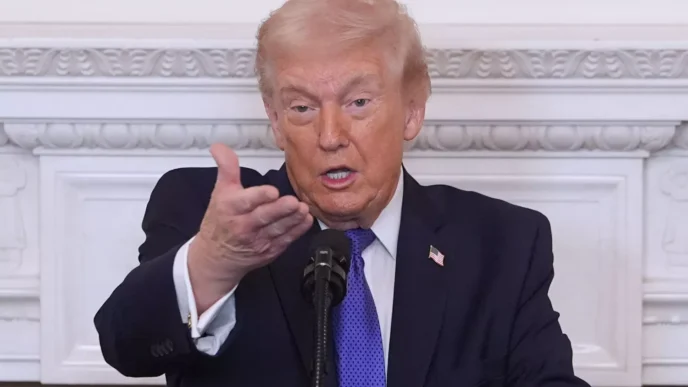

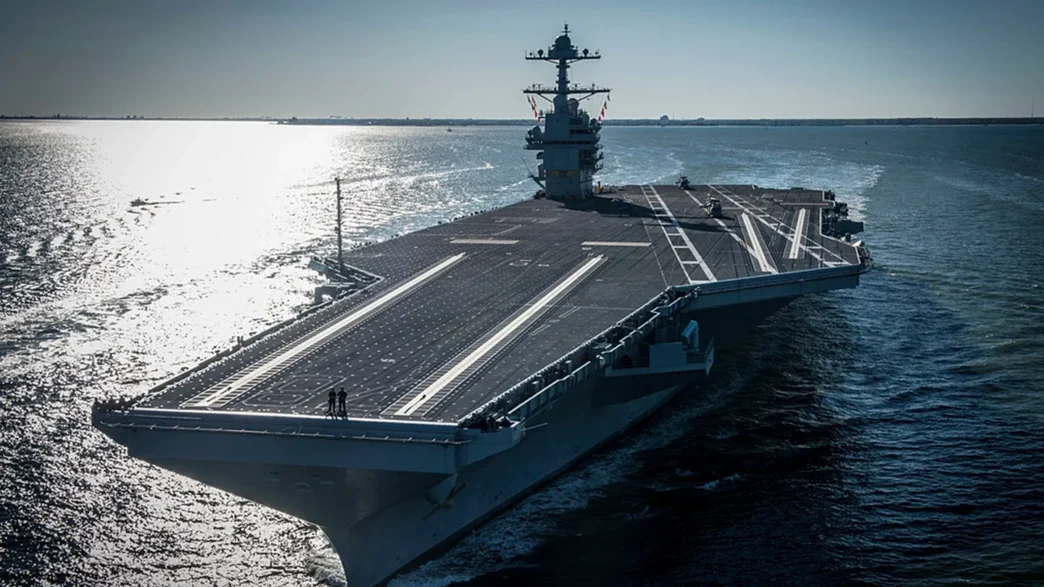
The deployment of the USS Gerald R. Ford aircraft carrier to the Middle East marks a significant escalation in the United States’ strategy to pressure Iran. This move places two formidable naval assets in the region, with the Ford joining the USS Abraham Lincoln and its accompanying guided-missile destroyers, which are already positioned in the Arabian Sea. The decision underscores a persistent effort by the Trump administration to compel Tehran into negotiations regarding its nuclear program, a goal U.S. President Donald Trump has indicated should be achieved “quickly.”
The USS Gerald R. Ford, widely recognized as the world’s most advanced aircraft carrier, brings substantial capabilities to the theater. With a displacement of 100,000 tonnes and a length of 334 meters, it can accommodate over 75 aircraft on its flight deck, typically operating with an air wing of 60 to 70. Its Electromagnetic Aircraft Launch System (EMALS) allows for up to 160 sorties per day, a substantial increase compared to older carriers. This air wing includes F/A-18 Super Hornet fighters, EA-18G Growler electronic warfare aircraft, E-2D Hawkeye early warning aircraft, and MH-60 helicopters. The carrier’s A1B nuclear reactors provide virtually unlimited range, removing the need for refueling for its estimated 50-year service life, generating enough power for a city of 100,000 inhabitants. Its defense systems are robust, featuring missile launchers, Phalanx cannons, and advanced anti-missile batteries. The Ford departed for deployment in late June 2025, meaning its crew of approximately 4,500 personnel will have been at sea for eight months by the end of February, an unusually extended period away from home port.
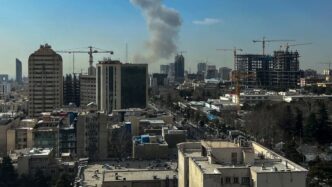
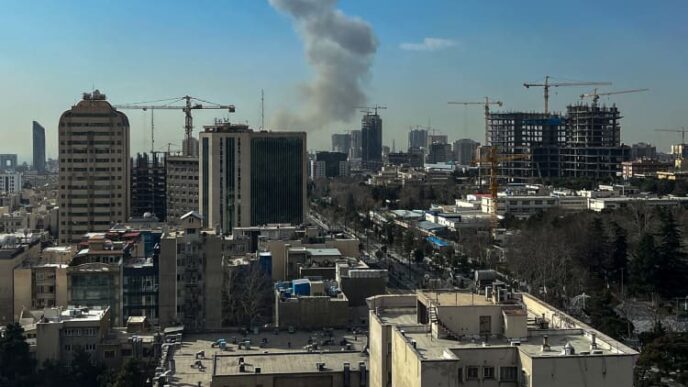
This military posture unfolds against a backdrop of considerable internal unrest within Iran. The country continues to grapple with the aftermath of a bloody crackdown on nationwide protests that began in late December 2025. These demonstrations, initially sparked by a currency collapse and hyperinflation, rapidly evolved into broader anti-regime grievances. The ensuing government response led to a complete information blockade and reports from human rights organizations suggesting anywhere from 6,000 to 30,000 fatalities, with tens of thousands more detained. As families of those killed begin traditional 40-day mourning ceremonies, discontent is expected to intensify. Online videos have depicted mourners gathering in various parts of the country, with one recording from Razavi Khorasan province showing people singing “Ey Iran,” a patriotic song from the 1940s that was initially banned after the 1979 Islamic Revolution.
The international community watches closely as these dynamics unfold. Gulf Arab states have voiced concerns that military action could trigger yet another regional conflict in a Middle East already contending with the Israel-Hamas war in Gaza, ongoing tensions in Lebanon, a fragile peace in Syria, and the Israel-Iran conflict from last summer. During that 12-day confrontation in June, Israeli airstrikes and covert ground operations significantly degraded Iran’s air defenses but did not neutralize its missile capabilities or target its vast army. Should hostilities resume, Iran’s likely response would involve targeting Israel and U.S. bases in the region with its remaining missile arsenal, alongside potential actions against oil infrastructure and mining the Strait of Hormuz, a critical chokepoint for global oil shipments.
While Iran’s military comprises approximately 600,000 regular troops and 200,000 in the paramilitary Islamic Revolutionary Guard Corps (IRGC), its proxy forces, including Hamas, Hezbollah, and Houthi rebels in Yemen, have been weakened by recent fighting. This raises questions about their capacity or willingness to support Tehran in a broader conflict. Furthermore, Iran’s air force, equipped with older F-14 and MiG-29 fighters, is considered outmatched by modern American F-35 stealth fighters and Israeli aircraft. The United States and Iran held indirect talks in Oman last week, with Trump subsequently warning Tehran that failing to reach an agreement would be “very traumatic.” Despite urging Iranians to continue protesting earlier, Trump has reportedly held off on direct intervention following a restart in U.S.-Iran talks and what Washington described as a pledge by Tehran to halt the crackdown and prevent executions of arrested demonstrators. Meanwhile, discussions between Trump and Israeli Prime Minister Benjamin Netanyahu have emphasized the need for Iran to scale back its ballistic missile program and cease support for militant groups.