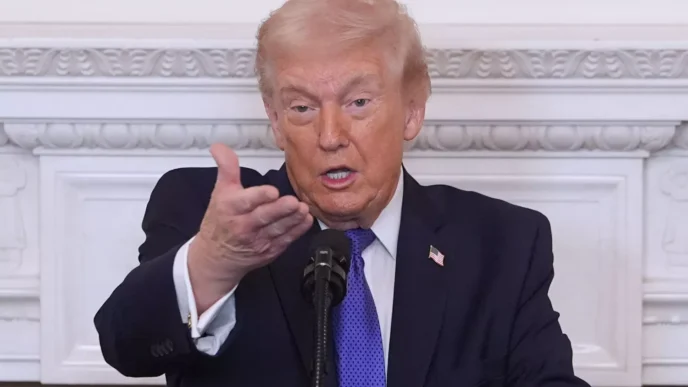

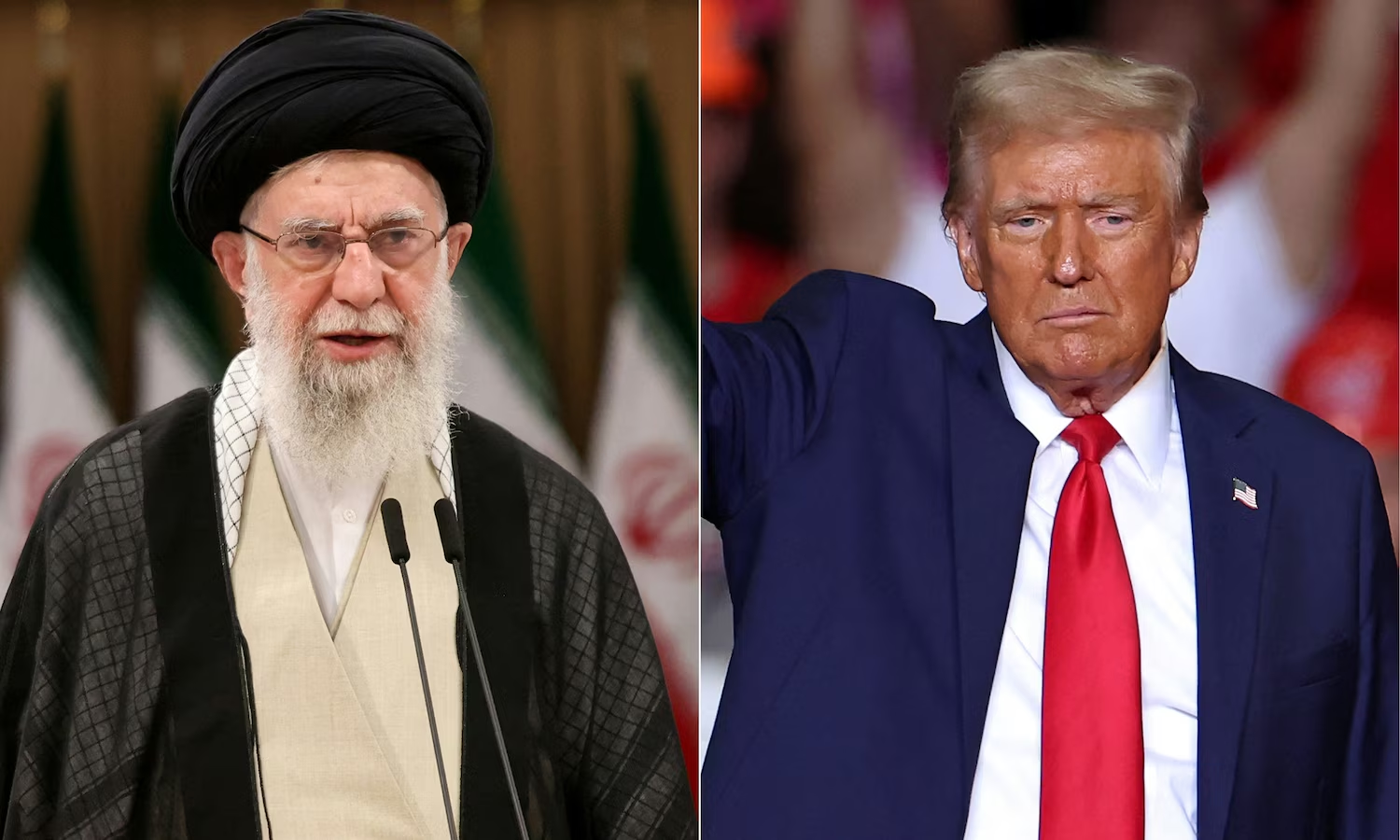
The timing of President Donald Trump’s recent statements regarding Iran has drawn considerable attention, particularly as the International Atomic Energy Agency (IAEA) prepares for its pivotal meetings. His remarks, indicating a potential military response if Iran were to develop nuclear weapons, arrive amidst escalating regional tensions and ongoing diplomatic efforts to curb Tehran’s nuclear ambitions. This declaration, delivered outside the formal channels of current US foreign policy, nevertheless casts a long shadow over the delicate negotiations and inspections central to the IAEA’s mandate.
For years, the international community has grappled with the complexities of Iran’s nuclear program. The 2015 Joint Comprehensive Plan of Action (JCPOA), from which the Trump administration withdrew in 2018, aimed to restrict Iran’s nuclear activities in exchange for sanctions relief. Since then, Iran has progressively reduced its compliance with the agreement’s terms, increasing its enriched uranium stockpiles and advancing its centrifuge technology. These actions have been consistently flagged by the IAEA, whose inspectors remain on the ground, albeit with diminished access in certain areas. The agency’s reports serve as the primary independent assessment of Iran’s nuclear trajectory, informing global policy decisions.
The former President’s explicit ultimatum introduces an additional layer of unpredictability into an already volatile situation. While not holding a current government position, his past actions and continued influence within a significant segment of American politics mean his words carry weight, both domestically and internationally. Such pronouncements can be interpreted in various ways: as a deterrent, a signaling of resolve, or potentially as a factor that could complicate the efforts of current US diplomats seeking a peaceful resolution. The Biden administration has, for its part, pursued a strategy of diplomacy alongside sanctions, aiming to restore some form of nuclear deal while addressing broader regional security concerns.
The IAEA’s upcoming board of governors meeting is expected to feature robust discussions on Iran’s compliance and the verification challenges faced by the agency. Director-General Rafael Grossi has repeatedly stressed the importance of full cooperation from Tehran to ensure the peaceful nature of its nuclear program. Any perceived threat of military action, regardless of its source, could influence the atmosphere of these technical discussions, potentially hardening positions or creating new avenues for dialogue. Member states will be closely scrutinizing the IAEA’s findings, which are crucial for maintaining the non-proliferation regime.
Regional actors, including Israel and Saudi Arabia, have long expressed profound concerns about Iran’s nuclear progress, advocating for stringent international oversight and, at times, hinting at preemptive measures. Trump’s firm stance resonates with some of these regional allies who view Iran as a primary destabilizing force. Conversely, other nations, particularly those still party to the JCPOA such as European powers, continue to emphasize the need for a diplomatic path, fearing that military confrontation could have catastrophic consequences for the Middle East and global energy markets. The intricate web of alliances and antagonisms means that any significant shift in rhetoric or policy can trigger a chain reaction across the geopolitical landscape. The challenge lies in balancing the imperative of non-proliferation with the avoidance of broader conflict, a tightrope walk that grows ever more precarious with each passing week.