
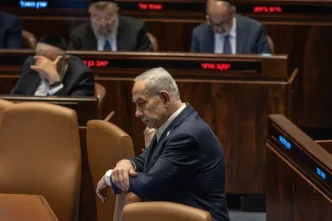
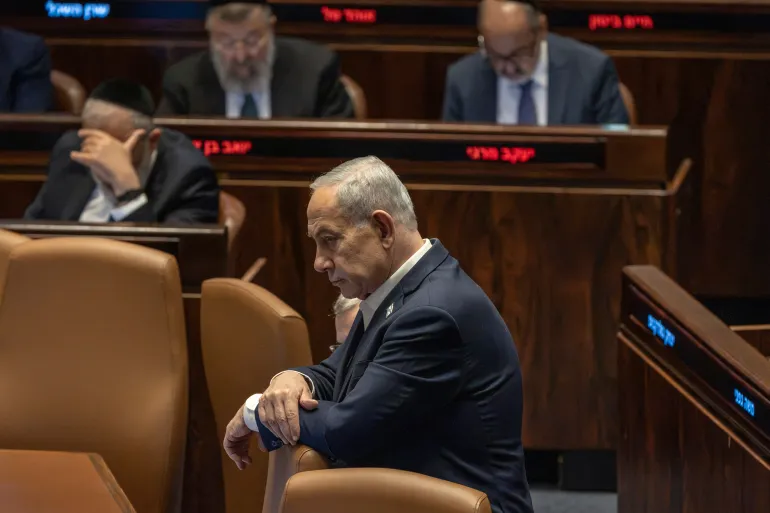
Prime Minister Benjamin Netanyahu’s declared intention to attend the upcoming United Nations General Assembly has ignited a public dispute, drawing a sharp rebuke from Columbia University Professor Mahmood Mamdani. The academic, known for his critical commentary on international relations and Israeli policy, stated unequivocally that Netanyahu is “not welcome” at the global forum, underscoring a deepening chasm of opinion regarding Israel’s presence on the international stage. This public declaration from Mamdani adds a distinct layer of controversy to an already complex diplomatic environment surrounding the annual gathering in New York.
Mamdani’s comments, delivered during a recent interview, reflect a sentiment increasingly voiced by various academic and activist circles critical of Israel’s actions in the Palestinian territories. His assertion goes beyond mere disagreement, suggesting a fundamental rejection of Netanyahu’s legitimacy to participate in such a high-profile international dialogue. This kind of direct challenge to a head of state’s attendance at the UN is unusual, particularly from a figure outside of direct diplomatic channels, yet it resonates with a segment of the public discourse that questions the efficacy and impartiality of international bodies. The professor’s academic standing and long history of engagement with post-colonial studies lend a certain weight to his pronouncements, moving them beyond the realm of casual criticism.
Netanyahu, for his part, has consistently emphasized his commitment to representing Israel’s interests on the world stage, viewing the UN General Assembly as a crucial platform for diplomatic engagement and for countering what he perceives as anti-Israel bias. His office has maintained that the Prime Minister will proceed with his plans, seeing the event as an opportunity to present Israel’s perspective on regional security, global challenges, and its ongoing conflict with Palestine. The Israeli leader’s resolve to attend, despite such vocal opposition, highlights a broader strategy of asserting national sovereignty and diplomatic presence regardless of external pressures. This stance is consistent with his long-standing approach to international relations, often characterized by a firm advocacy for Israel’s security imperatives.
The upcoming General Assembly is therefore poised to become a focal point for these diverging viewpoints. While the UN is designed as a forum for all member states, the question of who is “welcome” often becomes a symbolic battleground, reflecting deeper geopolitical tensions. Mamdani’s intervention, though not carrying official diplomatic weight, injects a moral and ethical dimension into the discussion, challenging the conventional protocols of international diplomacy. His words are likely to galvanize those who share his critical perspective, potentially leading to protests or further vocal opposition during Netanyahu’s visit.
The broader implications of this public disagreement extend beyond the immediate confrontation between Mamdani and Netanyahu. It underscores a persistent tension within international institutions concerning the participation of leaders whose policies face significant global condemnation. The UN, an organization founded on principles of multilateralism and dialogue, frequently grapples with how to balance the sovereign right of member states to participate with the moral and political objections raised by various stakeholders. This incident serves as a potent reminder that even routine diplomatic engagements can become arenas for profound ideological and political clashes, shaping the narrative surrounding global governance and accountability. The world will be watching to see how these contrasting positions manifest when leaders gather in New York.