
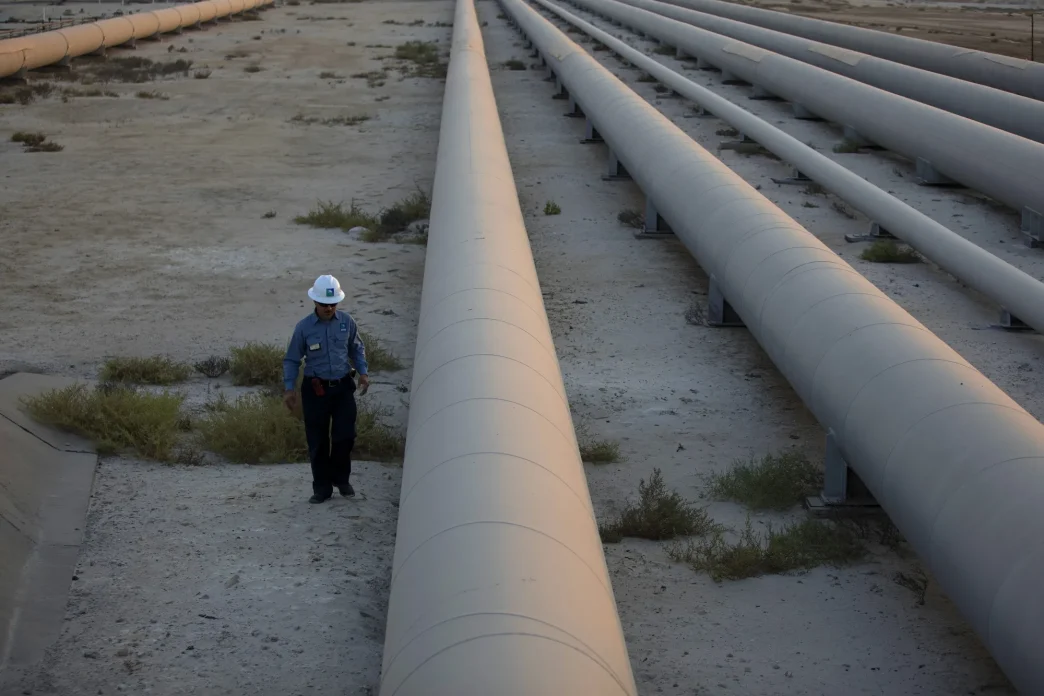
The sudden cessation of flows through Saudi Arabia’s crucial East-West Pipeline has sent a ripple of uncertainty across the global oil market, leaving analysts and traders scrambling to assess the potential fallout. This infrastructure, vital for transporting crude from the Kingdom’s eastern oil fields to its Red Sea coast, offers a strategic bypass of the Strait of Hormuz, a chokepoint through which much of the world’s oil transits. Its operational status is therefore not merely a logistical matter but a geopolitical barometer, instantly elevating concerns about supply stability.
Energy intelligence firms and commodity desks have been quick to highlight the pipeline’s significance, particularly in light of ongoing regional tensions. While initial reports indicate the shutdown is a precautionary measure following a drone attack, the immediate implication is a shift in Saudi Arabia’s crude export strategy. Tankers that would typically load at Red Sea ports, bound for European or North American markets, must now either await a resumption of flows or reroute to terminals in the Persian Gulf. This logistical pivot introduces delays, increases shipping costs, and, crucially, adds pressure on the already heavily trafficked Strait of Hormuz, amplifying anxieties about potential disruptions there.
Market participants are grappling with two primary concerns. Firstly, there is the immediate impact on crude inventories and delivery schedules, particularly for refiners accustomed to receiving Saudi crude via the Red Sea. Any prolonged disruption would necessitate sourcing crude from alternative suppliers or drawing down strategic reserves, both of which carry their own cost implications and market signals. Secondly, and perhaps more profoundly, the incident underscores the vulnerability of critical energy infrastructure in a volatile region. It serves as a stark reminder that even seemingly localized events can have cascading effects on global supply chains and commodity prices, illustrating the interconnectedness of energy security.
The East-West Pipeline, also known as the Petroline, has a capacity of approximately five million barrels per day, though it typically operates below that maximum. Its strategic value lies in its ability to provide optionality, allowing Saudi Arabia to diversify its export routes and reduce reliance on a single maritime passage. When this option is temporarily removed, the market reacts not just to the physical barrels potentially withheld, but to the loss of flexibility and the increased risk premium associated with a less diversified supply network. This perception of heightened risk often manifests in upward pressure on crude oil futures, as traders price in the potential for future supply shocks.
Governments and international bodies are undoubtedly monitoring the situation closely, understanding that stable energy flows are fundamental to economic stability. While Saudi Aramco has yet to provide a definitive timeline for the pipeline’s full resumption, their swift response to secure the affected area and assess damages is crucial. The market’s current posture is one of cautious observation; a short-term outage might be absorbed, but an extended closure would compel a more significant re-evaluation of global oil supply dynamics and potentially trigger more sustained price volatility. The incident highlights the delicate balance of geopolitics and energy, where a single piece of infrastructure can hold outsized sway over global economic sentiment.