
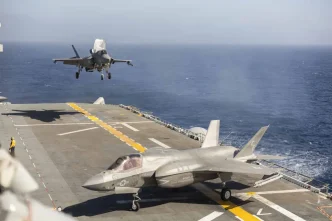
U.S. Marine Corps photo by Sgt. Mary R. Jenni
Oil is once again moving through the Persian Gulf at close to prewar volumes, even as Iran’s own exports have been squeezed to essentially zero under a US naval blockade, and analysts warn Tehran could still try to reassert control over the trade route by force.
JPMorgan estimated this past week that Middle East crude exports have climbed to about 17.5 million barrels a day, roughly 98% of prewar levels. Goldman Sachs put the figure even higher, estimating total exports from Persian Gulf producers at 19 million barrels a day. The routes getting that oil to market have shifted significantly, however: before the war, 83% of the region’s crude crossed the Strait of Hormuz; by September, 40% of it was bypassing the strait entirely, flowing instead through pipelines and alternative routes via Saudi Arabia and the United Arab Emirates. The remaining 60%, around 9.9 million barrels a day, still physically transits Hormuz.
The rebound has come despite the strain the war has put on Iran’s own economy. Inflation inside the country is running close to 90%, and the US blockade has kept Iranian crude exports pinned near zero throughout the conflict, even as the broader regional oil trade recovers around it. Analysts caution that an Iranian regime facing what it may see as an existential threat to its rule could respond by trying to re-escalate the war and reassert its grip on the oil trade through a scorched earth campaign, rather than accepting a settlement that leaves it permanently cut out of regional energy flows.
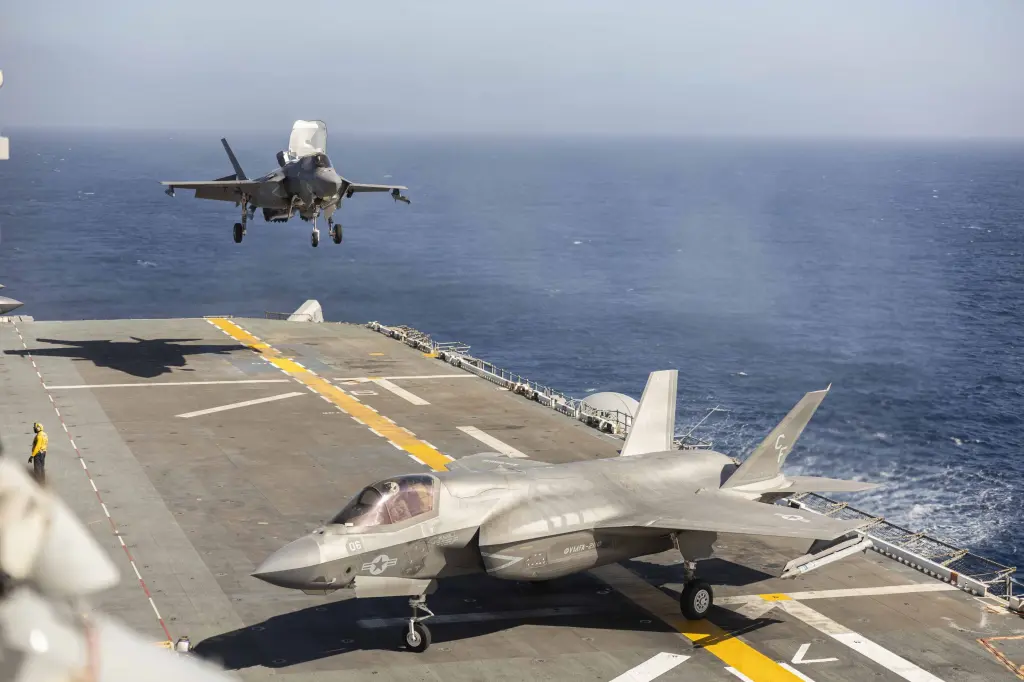
Washington is responding by building up its military presence rather than drawing it down. The Pentagon is deploying an additional aircraft carrier along with roughly 10,000 sailors and Marines to the Persian Gulf, a move that could give the US three full carrier strike groups operating in the region simultaneously, a concentration of naval power not seen there since the opening phase of the US-led invasion of Iraq in 2003.
The combination, oil markets largely stabilizing while Washington simultaneously escalates its military footprint, underscores how unresolved the underlying conflict remains. Even as global crude supply recovers, the standoff over who controls the Strait of Hormuz, and whether Iran accepts being effectively shut out of it, shows no sign of reaching a durable resolution.