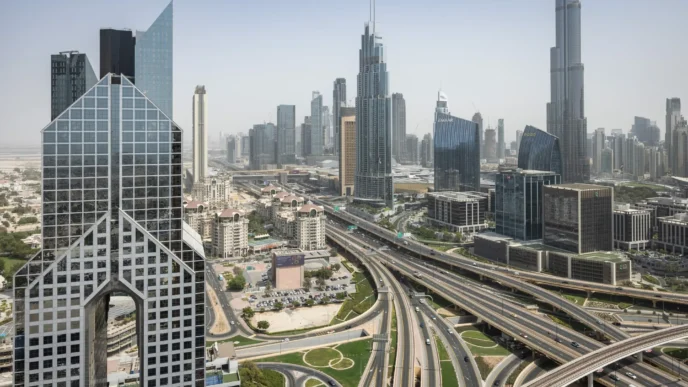

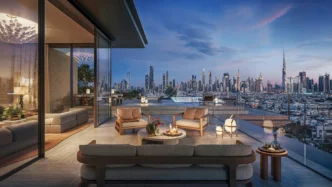

Dubai, long renowned for its audacious architecture and luxury real estate, is witnessing an unprecedented surge in interest in unbuilt penthouses — properties that exist on paper or in digital renderings but have yet to see construction cranes or poured concrete. This phenomenon provides a rare glimpse into the workings of one of the world’s most dynamic property markets, where demand among the ultra-wealthy often outpaces physical supply.
The current bidding spree underscores Dubai’s status as a global playground for luxury investors, driven by limited availability, speculative opportunities, and the city’s ongoing effort to brand itself as a hub of high-end living. This article examines why unbuilt penthouses are attracting such feverish attention, the mechanics of this market, and what it says about luxury real estate trends worldwide.
The Allure of Unbuilt Penthouses
Investing in an unbuilt penthouse may seem counterintuitive to traditional real estate principles — after all, the buyer cannot physically inspect the property. Yet for ultra-wealthy investors, several factors make these offerings irresistible:
- Exclusivity and first-mover advantage:
Developers often limit the number of penthouse units, creating artificial scarcity. Early investors can secure premium locations, larger floor plans, or bespoke customization options that may not be available once construction completes. - Potential for capital appreciation:
By purchasing early, buyers often lock in prices below anticipated market rates upon completion. In Dubai’s rapidly appreciating luxury market, the potential upside can be substantial. - Architectural prestige:
Many unbuilt penthouses feature designs from internationally renowned architects. Ownership confers not just property rights, but also cultural and social capital, enhancing the buyer’s prestige and personal brand. - Customization and personalization:
Buyers of unbuilt units frequently have input into layouts, finishes, and amenities, creating a highly tailored residence — a level of personalization rarely possible in pre-existing high-end apartments. - Speculative appeal and secondary market activity:
Some investors are less interested in occupying the penthouse and more focused on reselling or trading ownership stakes during the construction phase, effectively treating the property as a liquid luxury asset in a niche market.
Market Mechanics: How Dubai’s Luxury Property Frenzy Works
Dubai’s unbuilt penthouse market operates on a blend of high finance, strategic marketing, and global networking. Key elements include:
- Developer strategies: Real estate firms market penthouses with lavish renderings, virtual tours, and brand partnerships with luxury designers, attracting both domestic and international buyers.
- Auction-style bidding: In some cases, penthouses are sold through competitive bidding processes, creating a frenzy of interest and inflating final prices.
- Investor demographics: Buyers typically hail from the Middle East, Europe, Asia, and increasingly North America, reflecting Dubai’s status as a global hub for ultra-high-net-worth individuals (UHNWIs).
- Financing structures: Purchases may involve complex financial arrangements, including staged payments aligned with construction milestones, trusts, or offshore holding structures.
- Legal and regulatory frameworks: Dubai has adapted its property laws to accommodate foreign investors, offering long-term leases and freehold ownership to encourage high-end purchases, even before construction is completed.
Why Dubai, Why Now?
Several factors converge to make Dubai’s unbuilt penthouse market uniquely attractive at present:
- Global wealth migration:
Geopolitical tensions, tax incentives, and the city’s open economy have drawn UHNWIs seeking stable assets and lifestyle opportunities. - Scarcity and iconic developments:
Dubai continues to develop landmark projects — Burj Khalifa-adjacent towers, man-made islands, and futuristic mixed-use developments — with penthouses often constituting the most coveted units. - Currency and investment diversification:
Investors see Dubai real estate as a hedge against currency fluctuations and political risk in other regions, effectively combining luxury living with wealth preservation. - Lifestyle appeal:
Beyond financial calculations, Dubai’s luxury offerings — private beaches, yacht access, gourmet dining, and exclusive concierge services — create a lifestyle-driven rationale for purchasing unbuilt penthouses. - Post-pandemic demand rebound:
The COVID-19 pandemic accelerated wealth accumulation in certain sectors, particularly technology, finance, and crypto, providing buyers with liquidity and appetite for alternative investments.
Record-Breaking Prices and Bidding Wars
Recent sales and pre-sales illustrate the intensity of this market:
- Penthouses in premium developments are reportedly fetching tens of millions of dollars, with some units approaching $100 million in bidding wars.
- Competitive bidding has become common, with multiple parties vying for the same unbuilt unit, often driving prices 30–50% above initial listings.
- Developers report that pre-construction sales now constitute a significant portion of total revenue, underscoring the financial importance of unbuilt penthouse offerings.
The bidding frenzy highlights the unique psychology of Dubai’s luxury market: scarcity, prestige, and speculation intersect to create a high-stakes environment where perception of value drives reality.
Risks and Considerations
While the allure is strong, investing in unbuilt penthouses carries notable risks:
- Construction delays: Projects may be delayed due to supply chain issues, labor shortages, or regulatory hurdles, affecting delivery timelines.
- Market volatility: Luxury property prices can fluctuate, particularly if economic conditions shift globally or regionally.
- Liquidity constraints: Selling an unbuilt unit before completion may be challenging outside specialized investor networks.
- Regulatory changes: Though Dubai offers investor protections, changes in property law, visa requirements, or taxation could impact returns.
- Speculative bubble concerns: Extreme pre-construction demand could create pricing distortions, particularly if global wealth growth slows.
Despite these risks, the appetite among UHNWIs remains strong, driven by both financial and prestige considerations.
Broader Implications for Luxury Real Estate
Dubai’s unbuilt penthouse market is not just a local phenomenon — it reflects broader trends in global luxury real estate:
- Ultra-wealth concentration: Wealthy investors are increasingly concentrated in top-tier assets, creating a bifurcated market between high-end and mid-market properties.
- Global mobility of capital: Cities with favorable tax regimes, international connectivity, and lifestyle appeal are attracting outsized interest from global investors.
- Pre-construction as an investment vehicle: The concept of buying on paper before completion is expanding in other luxury markets, from London to Singapore, mirroring Dubai’s model.
- Experiential value: The narrative of prestige, exclusivity, and customization increasingly drives purchasing decisions, alongside traditional financial returns.
Conclusion
Dubai’s unbuilt penthouses exemplify the city’s bold approach to real estate, where vision, exclusivity, and speculative demand converge to create a market unlike any other. The current bidding spree among ultra-wealthy investors underscores both the allure and the risks of purchasing property that exists primarily in plans and renderings.
For buyers, developers, and market observers, these sales provide insights into global wealth flows, luxury consumption, and the psychology of high-stakes real estate. Dubai continues to position itself as a global playground for the ultra-rich, where even unbuilt properties can command staggering sums, and the thrill of exclusivity drives market dynamics as much as concrete and glass.
In the end, in a city where imagination meets ambition, ownership of a vision — however unbuilt — can be as coveted as a completed masterpiece.