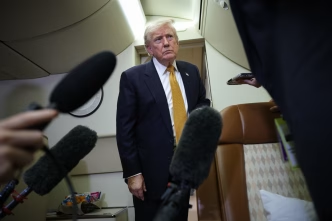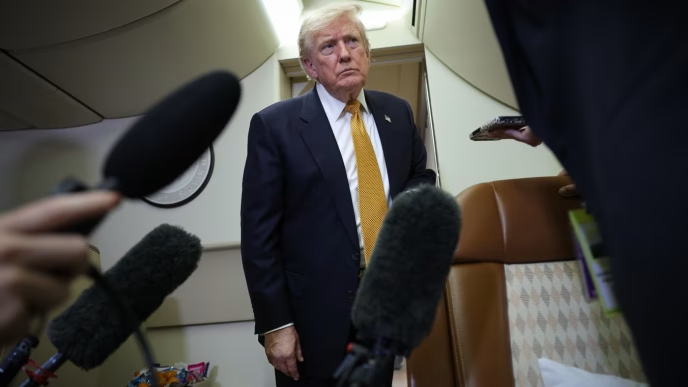

The assertion by Miller, framing the Strait of Hormuz as Iran’s “new nuclear weapon,” introduces a stark and provocative metaphor into the ongoing geopolitical discourse surrounding the critical waterway. This statement, delivered amidst heightened regional tensions, underscores a significant shift in how some policymakers perceive Iran’s strategic leverage beyond its conventional or nuclear ambitions. It suggests an understanding that Iran’s ability to disrupt global oil flows through the strait could yield immense economic and political consequences, akin to the deterrent effect traditionally associated with nuclear capabilities.
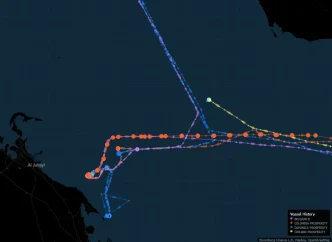
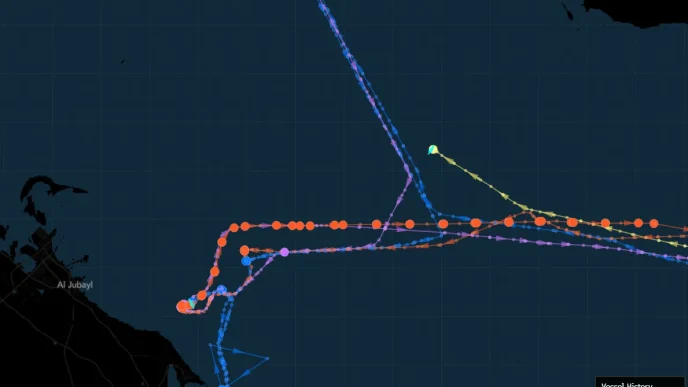
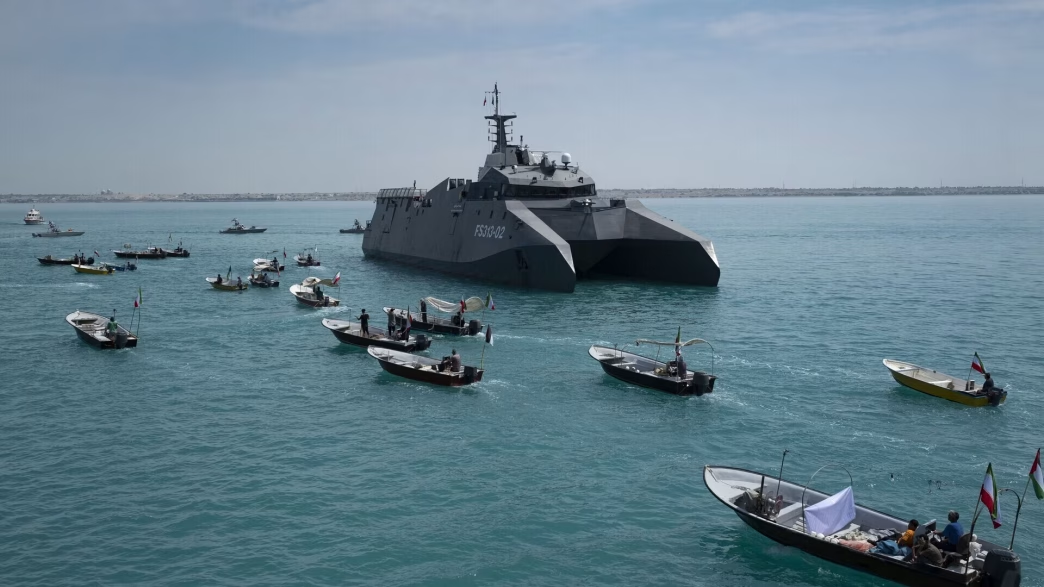
For decades, the Strait of Hormuz, a narrow chokepoint between the Persian Gulf and the open ocean, has been recognized as one of the world’s most vital maritime passages. Approximately one-fifth of the world’s total oil consumption, along with a substantial portion of its liquefied natural gas, transits through this 21-mile-wide channel daily. Any significant impediment to this flow, whether through direct blockade or sustained harassment of shipping, would inevitably send shockwaves through international energy markets, triggering price spikes and potentially destabilizing global economies. Iran’s naval forces have historically demonstrated a capacity for such disruption, utilizing fast attack craft, mines, and anti-ship missiles in various exercises and past incidents.
The comparison to a “nuclear weapon” by Miller is not intended to imply a literal atomic threat, but rather to highlight the profound and far-reaching impact a closure or severe restriction of the strait would have. Nuclear weapons deter through the promise of catastrophic destruction, compelling adversaries to reconsider aggressive actions. In a similar vein, the economic fallout from a Hormuz closure could be so severe and widespread that it could force significant concessions from international actors, effectively granting Iran a form of non-conventional leverage without resorting to actual weapons of mass destruction. This perspective suggests a recognition of Iran’s asymmetric warfare capabilities and its potential to exploit economic vulnerabilities on a global scale.
Iran’s leadership has, on numerous occasions, alluded to its capacity to close the strait in response to perceived threats or sanctions. These pronouncements are often interpreted as a strategic lever, a reminder to the international community of the potential costs of escalating pressure on Tehran. The continuous development of Iran’s naval assets, particularly its submarine fleet and anti-access/area denial capabilities, further supports the notion that such a threat is not merely rhetorical. While a full, sustained closure would undoubtedly invite a robust international military response, even temporary disruptions could achieve significant geopolitical objectives for Iran.
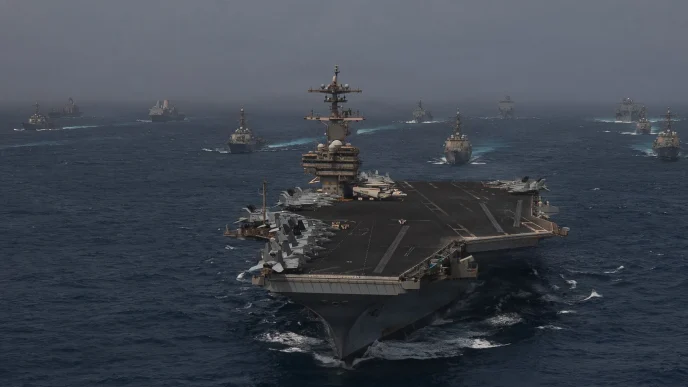
The international community, particularly nations heavily reliant on Middle Eastern oil, has long grappled with strategies to ensure the free flow of commerce through the Strait of Hormuz. Naval patrols by various international forces are a constant presence, designed to deter aggression and respond swiftly to any maritime incidents. However, the sheer volume of traffic and the complex geography of the strait make it a challenging environment to secure entirely against determined, asymmetrical threats. Miller’s statement thus serves as a stark reminder that the strategic value of this waterway continues to be a central feature of regional and global security calculations, evolving beyond traditional military power dynamics to encompass economic and political coercion. The discourse surrounding the Strait of Hormuz is clearly entering a new phase, where its economic significance is being equated with the ultimate instruments of national power.