
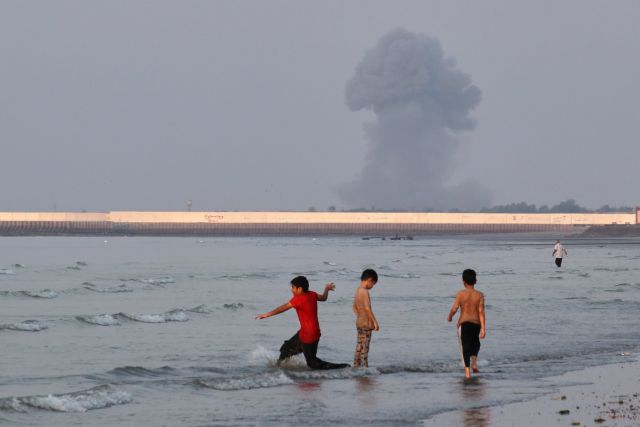
A series of reported strikes on three commercial vessels in Omani waters, close to the Strait of Hormuz, has escalated maritime tensions, coinciding with Donald Trump’s arrival at a high-stakes NATO summit in Ankara, Turkey. These incidents, described by one US official as a “gross violation” of existing understandings with Iran, unfolded as Iran also observed a multi-day funeral for its recently deceased supreme leader, Ayatollah Ali Khamenei. The timing suggests a complex interplay of regional dynamics and international diplomacy.
One of the vessels, the Qatari-flagged liquefied natural gas tanker *al-Rakiyat*, was reportedly struck while navigating near the critical waterway. Qatar’s Foreign Ministry quickly condemned the incident, characterizing it as a “grave and explicit violation of international law” and directly attributing responsibility to Tehran. The ministry also summoned Iran’s deputy ambassador, delivering a formal protest note and demanding clarification, underscoring the perceived threat to global energy supplies. The United Kingdom Maritime Trade Operations (UKMTO) center reported the attack occurred late Monday evening UTC, placing it in the early hours of Tuesday in the Persian Gulf.
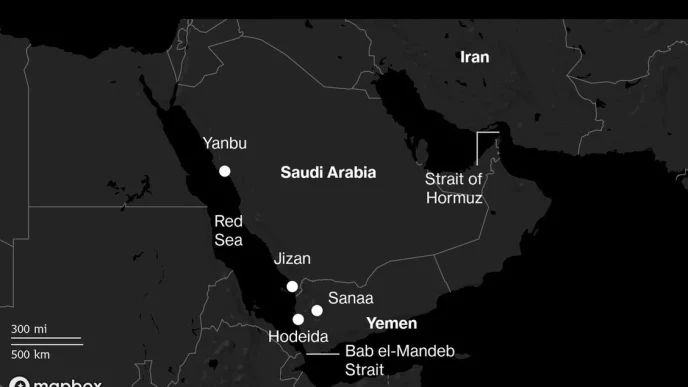
Adding to the complexity, Saudi Arabia’s Foreign Ministry later reported that one of its own crude oil carriers, the *Wedyan*, had also been targeted. This strike reportedly took place 16 nautical miles east of Khor Fakkan, a port situated in the United Arab Emirates on the Gulf of Oman. Saudi Arabia echoed Qatar’s strong condemnation, labeling the attacks an “assault on the security and safety of international navigation” and holding Iran fully accountable. Meanwhile, Iran’s semi-official Fars News Agency, citing unnamed sources, offered a different narrative, claiming a Qatari tanker had been attacked after “ignoring repeated warnings” while traversing the Strait of Hormuz. However, the agency also noted that no official confirmation or denial of these reports had been issued.
These maritime incidents unfold against a backdrop of fragile negotiations between the US and Iran. Talks aimed at de-escalating tensions and forging a lasting agreement have been temporarily paused during the mourning period for Ayatollah Khamenei, who was killed in an airstrike in late February. On the same day as the vessel attacks, President Trump indicated to reporters that the US would either secure a deal with Iran or “finish the job,” according to Reuters. Iranian Foreign Minister Abbas Araghchi, in a post on X, warned that negotiations would not proceed if threats persisted, specifically invoking paragraph 13 of the US-Iran memorandum of understanding, which outlines conditions for talks, including an end to all fighting.
A key condition within that memorandum explicitly requires Iran to ensure the safe and free passage of commercial vessels through the Strait of Hormuz. This critical chokepoint, through which a significant portion of the world’s crude oil once passed, has historically been a point of leverage for Tehran. Since the memorandum’s signing, maritime traffic through the strait has increased, with many vessels utilizing a route close to Oman. However, Iran has also sought to assert greater control, with its Islamic Revolutionary Guard Corps (IRGC) recently warning about deploying patrol boats to block the “Omani route,” according to Iranian media. Despite the recent incidents, the UKMTO noted that while risks remain, they are lower than before the memorandum, though Iranian intent and capability for hostile action persist, necessitating continued vigilance. Prior to the conflict, over 100 vessels transited the strait daily; recent figures from MarineTraffic indicate 108 crossings over a three-day period from Friday to Sunday.