
Saifurahman Safi/Xinhua via Getty Images
The US naval blockade on Iran is squeezing the country’s economy, and Tehran’s attempt to reroute trade over land instead of sea is proving to be a poor substitute. Before the current conflict, more than 80% of Iranian trade moved by sea through the country’s southern ports, a route that has since become far riskier to rely on.
The impact on trade volumes has been sharp. Non-oil exports fell 28% to $15 billion in the five months ending August 22, while imports dropped 26% to $17 billion over the same period. Trade with land-neighbor Turkey has partly picked up the slack, climbing 19% to $3.2 billion in the first half of the year, but the shift has come at a steep logistical cost.
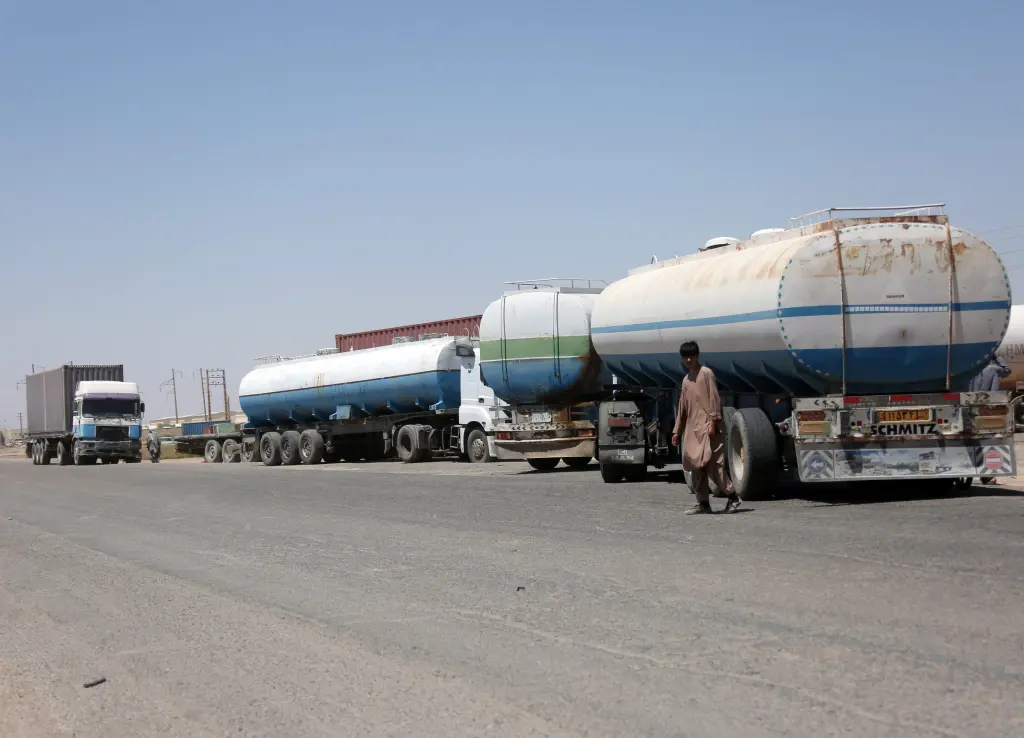
Border crossings built for a fraction of this traffic are now buckling. At one crossing with Turkey, 3,700 trucks were reported stranded on the Iranian side alone. Drivers face extraordinary waits, with return-trip delays at the border reaching as long as 24 days in some cases; one trucker described spending 23 days waiting at a crossing along the Afghanistan border.
The economics of the detour are brutal. Shipping a single container between Iran and China by sea costs roughly $3,000. Rerouting that same container overland to bypass the blockade pushes the cost to around $12,000, a fourfold increase that adds up to an estimated $18 billion in additional annual transportation costs for Iranian trade.
Meanwhile, the US military presence in the Strait of Hormuz has kept global oil and shipping traffic moving through the world’s most important energy chokepoint: over the past two months, the US has supported the transit of 1 billion barrels of oil through the strait and assisted more than 2,000 commercial ships. For Iran, that same naval presence is the reason its ports are no longer a reliable route to the rest of the world.