

As Israel debates how to investigate the failures surrounding the Hamas-led attack, bereaved families are demanding answers — but disagreeing over who should lead the inquiry and how it should operate.
Three years after the October 7, 2023, attacks, Israel is still confronting a fundamental question: how should a country investigate the failures that left so many of its citizens exposed to violence?
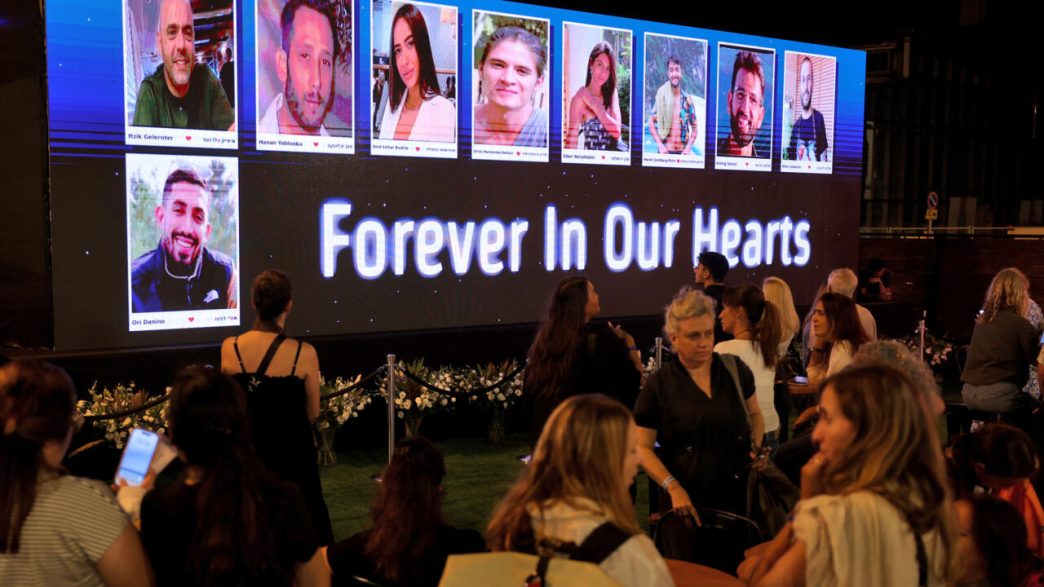
For the families who lost loved ones, the question is not merely institutional or political. It is profoundly personal.
Parents want to understand the circumstances in which their children died. Spouses seek answers about decisions made before and during the attack. Survivors want to know why warning signs failed to produce an effective response and how similar failures might be prevented.
While military and security investigations have examined parts of the disaster, Israel has yet to establish a comprehensive state commission of inquiry under its existing legal framework.
The resulting debate has placed bereaved families at the center of a national struggle over truth, accountability and institutional independence.
A Shared Demand, Different Approaches
The families affected by October 7 do not speak with one voice.
Some have demanded the establishment of a traditional state commission of inquiry, whose members would be appointed by the president of Israel's Supreme Court under the existing Commissions of Inquiry Law.
Others have called for a different national investigative framework, arguing that the established appointment process would not command sufficient confidence across Israeli society.
Those divisions were visible in January 2026, when bereaved families opposing a politically appointed inquiry organized an alternative committee session as the Knesset debated a new investigative model.
In October 2026, families associated with the HaGvura and Din V'Tzedek forums publicly advocated a national commission rather than a Supreme Court-led inquiry.
The disagreement reflects a difficult reality: families may share the same demand for answers while holding fundamentally different views about which institutions can be trusted to deliver them.
Representation or Independence?
One possible response is to give bereaved families a formal role in the investigation itself.
A bill advanced in the Knesset in 2026 proposed a special investigative commission that would include released hostages or bereaved family members as observers.
Earlier versions of the proposal outlined a role for family representatives in following deliberations, suggesting questions and commenting on the commission's work.
Such arrangements raise important questions.
Would direct participation give families greater confidence in the process? Could it help investigators identify overlooked evidence or questions that institutions have failed to address?
Or might formal representation create difficult choices about which families are included, whose experiences are prioritized and how investigators maintain their independence?
There is a meaningful distinction between allowing families to testify, giving them access to information, appointing them as observers and granting them formal decision-making authority.
Each model carries different implications for transparency, accountability and investigative integrity.
The Human Cost of Unanswered Questions
At Israel's national memorial ceremony in October 2026, Omri Shifroni, who lost four relatives in Kibbutz Be'eri, publicly called for a state commission of inquiry.
His appeal reflected a concern shared by many affected families: that meaningful accountability requires a serious examination of what went wrong, rather than competing political explanations of the disaster.
The unresolved questions extend beyond individual military failures.
They include the intelligence assessments that preceded the attack, the readiness of forces along the Gaza border, the government's approach toward Hamas and the decisions made as the assault unfolded.
For families, answering these questions may help establish a fuller understanding of the circumstances surrounding their losses.
But an investigation must also serve the public interest. Its findings need to be evidence-based, procedurally fair and capable of withstanding scrutiny even from those who disagree with its conclusions.
A New Proposal, an Old Dilemma
The debate has also entered the 2026 election campaign.
Amcha Israel, the political party led by former senior IDF officer Ofer Winter, has outlined a proposal for a special October 7 investigative commission.
According to the party's published outline, its proposed commission would include three representatives of bereaved families, alongside legal and other professional members.
The party proposes a special appointment mechanism and substantial investigative authority, aiming to combine professional examination with direct representation of those affected by the disaster.
The proposal highlights a broader dilemma facing any national inquiry: how to give families a meaningful voice without compromising the independence of those responsible for establishing the facts.
The answer may depend less on symbolic representation than on the specific powers and safeguards established by law.
Who selects the family representatives? What information can they access? Can they question witnesses? Would they participate in determining findings, or serve in an advisory capacity?
These are not minor procedural details. They could shape both the credibility of the inquiry and the public's confidence in its conclusions.
Beyond the Investigation
A commission of inquiry cannot reverse the deaths of October 7 or erase the trauma experienced by survivors and families.
It can, however, establish an authoritative record, examine institutional responsibility and recommend changes intended to reduce the likelihood of future failures.
The families' involvement could be an important part of that process, provided their role is clearly defined and the investigation remains independent.
Ultimately, the challenge is to build an inquiry that does more than acknowledge suffering.
It must pursue evidence wherever it leads, examine decisions at every relevant level of authority and explain its findings to a society that remains deeply divided.
For the families of October 7, the demand for answers is inseparable from the lives that were lost.
For Israel, the test is whether those answers can become the foundation for lasting institutional accountability.