
A confidential United Nations investigation has concluded that the United Arab Emirates helped fund and train Colombian mercenaries who fought alongside Sudan’s Rapid Support Forces, a paramilitary group accused of genocide and war crimes in the country’s civil war.
The report by the UN Panel of Experts on Sudan, seen by Bloomberg and shared with the UN Security Council, found that a UAE-based private security company recruited the Colombians to support the RSF. It also said a UAE-linked base in Somalia was used to transport and train the fighters before they were sent into Sudan.
From WhatsApp to the battlefield
The recruitment often began with messages sent to retired Colombian soldiers. One veteran told AFP that a WhatsApp message asked whether any reservists were interested in work and directed them to send details privately. Many of the recruits were drawn by salaries of $2,500 to $4,000 a month, several times what they received in military pensions.
Some were initially told they would be working as security guards in Dubai. Only later did they learn that the United Arab Emirates was a stopover for training before deployment to Africa. Investigators say the mercenaries traveled to Sudan through at least two routes: via eastern Libya, a corridor controlled by UAE-backed strongman Khalifa Haftar, or through Bosaso airbase in Somalia’s Puntland region.
A sophisticated foreign force
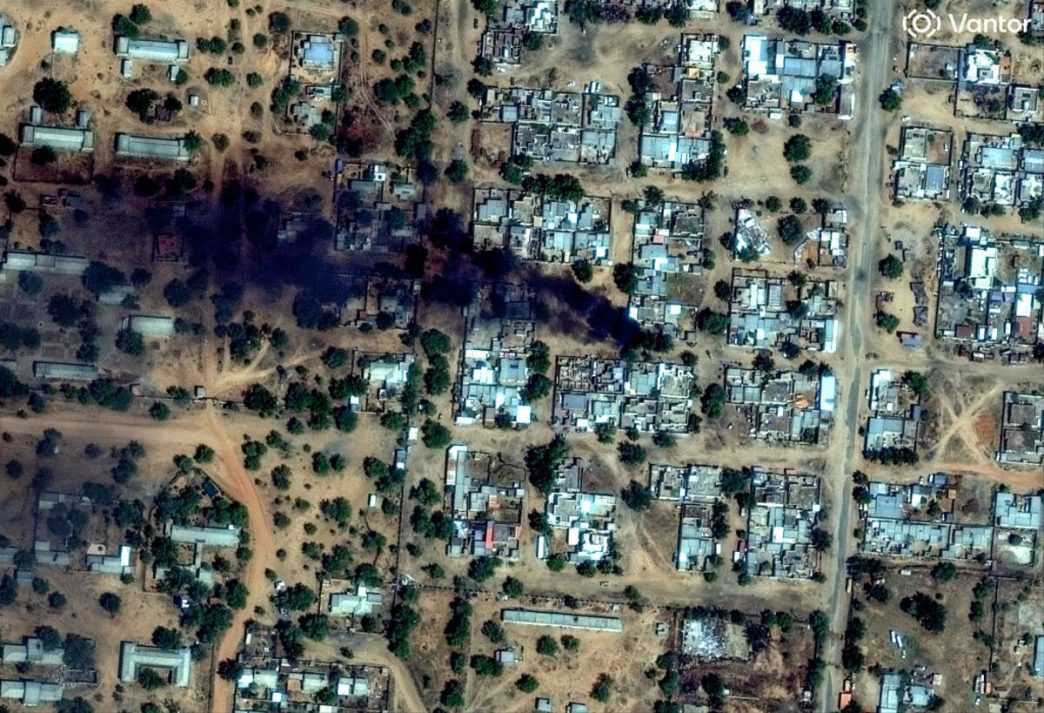
Colombian veterans were sought for their expertise in drone and artillery operations, capabilities that the RSF largely lacked. Geolocated footage placed the Colombians at some of the worst fighting in Darfur, including the siege of El-Fasher, which the paramilitary captured in October after months of fighting.
Videos verified by AFP showed Colombian fighters driving past the burned ruins of Zamzam camp, where more than 400,000 people fled and up to 1,000 were reported killed in ethnic massacres. Other footage showed them posing with boys holding assault rifles and training RSF fighters to use rocket launchers.
Network of companies and routes
Investigators and journalists have identified retired Colombian colonel Alvaro Quijano as a central figure in the recruitment network. The United States sanctioned Quijano and his wife Claudia Oliveros in December, accusing them of running a transnational network that sent hundreds of former Colombian soldiers to Sudan.
Documents seen by AFP showed Colombians signing contracts with Global Security Services Group, a private security contractor based in Abu Dhabi. The company’s website previously listed clients including several UAE government ministries, though those references were later removed. Salaries were routed through a Panama-registered firm.
After some convoys were ambushed in the Darfur desert, the network shifted routes. Mercenaries began transiting through Bosaso in Somalia, where witnesses told AFP that a UAE-run section of the airport hosted uniformed foreign fighters and cargo planes linked to RSF supply lines.
Denials and broader context
The UAE has repeatedly denied backing the RSF. A senior Emirati official told AFP that claims of supplying, financing, or transporting weapons to warring parties were false and unsubstantiated. The official said the UAE is committed to achieving a ceasefire in Sudan.
Despite the denials, UN experts, US lawmakers, and human rights groups have long accused Abu Dhabi of supporting the paramilitary. Sudan's army-aligned government filed a complaint with the UN Security Council last year accusing the UAE of recruiting Colombian fighters.
The war in Sudan, which began in 2023, has pitted the RSF against the Sudanese army and has triggered one of the world's worst humanitarian crises. Regional powers including the UAE, Egypt, Saudi Arabia, and Iran have been accused of fueling the conflict.
Colombia recently passed a law banning the recruitment of mercenaries, but for some fighters the change came too late. Families in Colombia continue to wait for bodies that may never be returned.