
The sheer volume of heavy equipment, precision valves, and climate-control machinery packed across the Dubai World Trade Centre tells a story that goes far beyond exhibition statistics. Over four days of relentless dealmaking, Big 5 Global 2026 pulled together more than 1,800 exhibiting enterprises spanning 60 countries and 20 national pavilions. The annual assembly has long served as a bellwether for the international building sector, but this year felt distinctly different. Instead of routine networking, delegates moved through the halls with an urgency dictated by changing supply chains, ambitious regional infrastructure spending, and an aggressive push toward higher engineering standards.
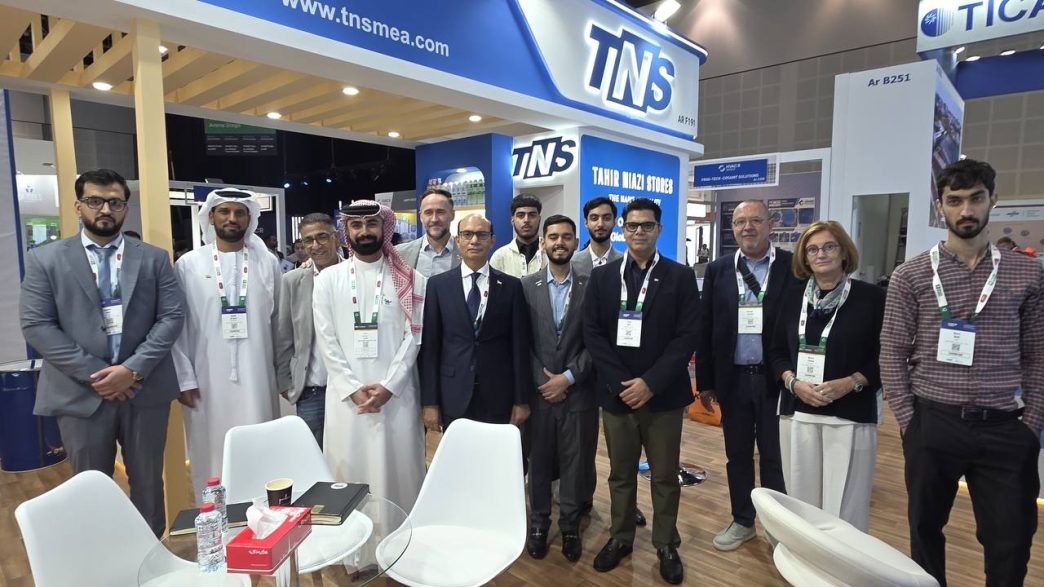
For industry veterans on the exhibition floor, the gathering confirmed that the Gulf has transformed from a mere consumer of global technology into the central junction where tomorrow’s commercial alliances are forged. Walking away from the bustling concourses, TNS Group Managing Director Tahir Niaz, joined by Dr. Salem Mubarak Al Ameri and Hadi Tahir, framed the week not simply as a successful showcase, but as a watershed moment for cross-border industrial trade. In their view, the event offered a clear look at how rapid urbanization across the Middle East, Africa, and South Asia is demanding sophisticated, highly durable technical systems.
Much of that demand centers on behind-the-scenes mechanics that make modern mega-developments viable. TNS Group brought a heavy-hitting engineering portfolio to the fore, showcasing established international manufacturers whose components quietly keep industrial facilities and commercial skyscrapers operating. The presence of storied brands such as Mueller Streamline and Copeland from the United States, alongside European innovators Danfoss and Italy’s Dena SRL, underscored an intensifying regional appetite for advanced HVAC, refrigeration, and fluid control solutions. When paired with high-spec copper and industrial piping from South Africa’s Maksal Tubes, the lineup reflected an overarching trend across the exhibition floor: developers and contractors are no longer willing to cut corners on mechanical integrity and thermal efficiency.
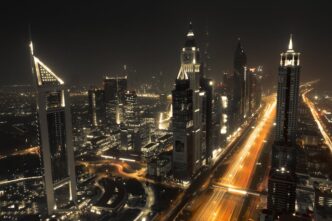
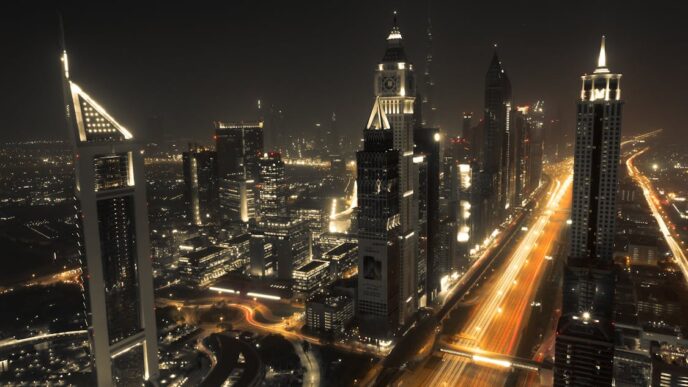
That operational reality ties directly into the broader economic architecture crafted by the United Arab Emirates. Over the past decade, Dubai has systematically removed the friction typically associated with international commerce, blending top-tier logistics with regulatory clarity. During their post-event discussions, Niaz, Al Ameri, and Tahir pointed out that hosting an event of this scale requires far more than floor space. It demands an ecosystem capable of moving thousands of corporate leaders, engineers, and freight containers without a hitch. The UAE leadership’s calculated investments in modern transport, simplified business licensing, and long-term industrial policies have turned the city into a neutral, highly effective launchpad for companies seeking territory far outside their domestic markets.
That dynamic is opening significant corridors for commercial traffic between the Middle East and emerging industrial hubs elsewhere, particularly in Pakistan. The TNS Group delegation noted that the relationships solidified during the November 23-26 gathering are poised to accelerate bilateral enterprise. With capital seeking predictable returns and engineering firms looking for sustained project pipelines, the bridge between UAE-based operations and Pakistani technical capacity is becoming more pronounced. Regional players are utilizing Dubai as an operational springboard, allowing them to integrate into global supply networks that would otherwise remain difficult to access.
The energy witnessed throughout Big 5 Global 2026 suggests that the regional construction and engineering landscape is accelerating rather than cooling down. While global economic forecasts remain choppy in Western capitals, the mood inside the Dubai World Trade Centre reflected practical optimism backed by active order books. The event proved that when top-tier manufacturing meets deliberate, forward-looking state leadership, commercial momentum takes care of itself. For leaders like Niaz, Al Ameri, and Tahir, the conclusion of the exhibition does not signal a return to business as usual. It marks the starting line for executing a whole new generation of international contracts.