
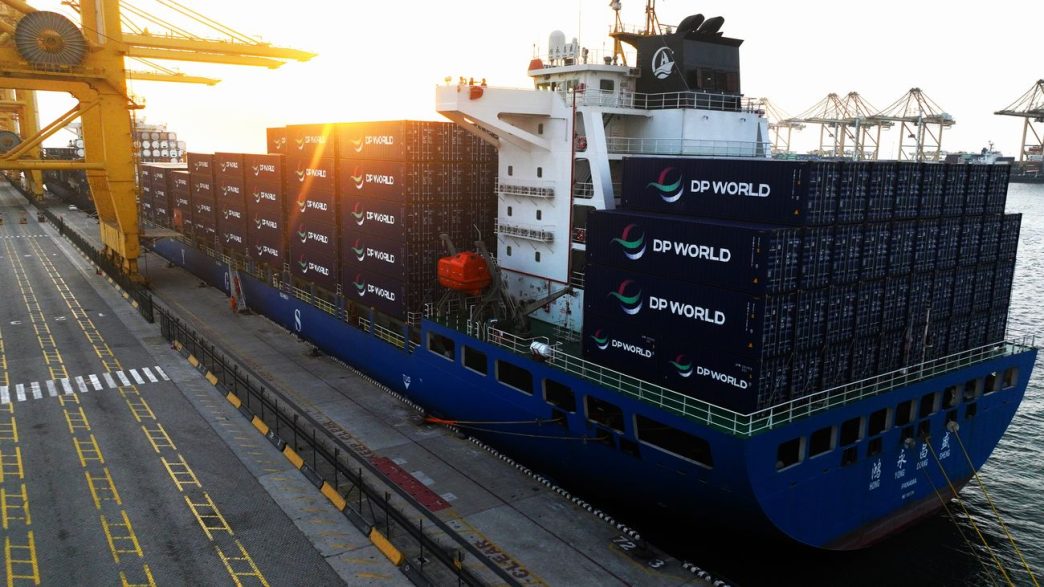
DP World, one of the world’s largest port operators, has announced its intention to develop two new container terminals within the United Arab Emirates, strategically located outside the Strait of Hormuz. This initiative represents a significant expansion of the UAE’s maritime infrastructure and could reshape regional shipping dynamics. The projects are poised to enhance the Emirates’ logistics capabilities, offering alternative routes for cargo movement in and out of the Arabian Gulf.
The decision to build these terminals outside the Strait of Hormuz carries considerable geopolitical and economic implications. The strait, a narrow choke point between the Persian Gulf and the Gulf of Oman, is vital for global oil and gas shipments, as well as general cargo. Its strategic importance has, at times, made it a flashpoint for international tensions. By establishing new facilities beyond this bottleneck, DP World aims to provide shippers with increased security and potentially reduce transit times for vessels bypassing the strait entirely. This move could appeal to international logistics firms seeking to mitigate risks associated with navigating the congested waterway.
While specific locations for the two new terminals have not yet been publicly disclosed, the emphasis on their placement outside the Strait of Hormuz strongly suggests sites along the UAE’s Gulf of Oman coastline, such as Fujairah. Fujairah already serves as a critical bunkering hub and has existing port infrastructure that could be expanded upon or complemented by these new developments. The deeper waters and direct access to the Indian Ocean offered by such locations would provide a distinct advantage for ultra-large container vessels.
The investment required for projects of this scale is substantial, reflecting DP World’s long-term vision for the region’s trade landscape. Such developments typically involve extensive dredging, construction of berths, installation of advanced crane systems, and the establishment of vast storage facilities. These terminals are not merely points of transshipment but often serve as catalysts for broader economic development, attracting ancillary industries and creating employment opportunities in logistics, manufacturing, and related services. The company’s track record of developing world-class ports globally suggests a comprehensive approach to these new ventures, likely incorporating cutting-edge automation and sustainable practices.
The competitive landscape for container shipping in the Middle East is robust, with several major ports vying for market share. DP World’s expansion reinforces the UAE’s position as a multimodal logistics hub. These new terminals are expected to complement, rather than cannibalize, existing operations within the country, such as the bustling Jebel Ali Port in Dubai. Instead, they will likely cater to different segments of the shipping market or provide redundancy and increased capacity to handle projected growth in global trade volumes, particularly those connecting Asia, Africa, and Europe. This strategic diversification of port assets underscores a forward-looking approach to maintaining the UAE’s prominence in international trade corridors.