
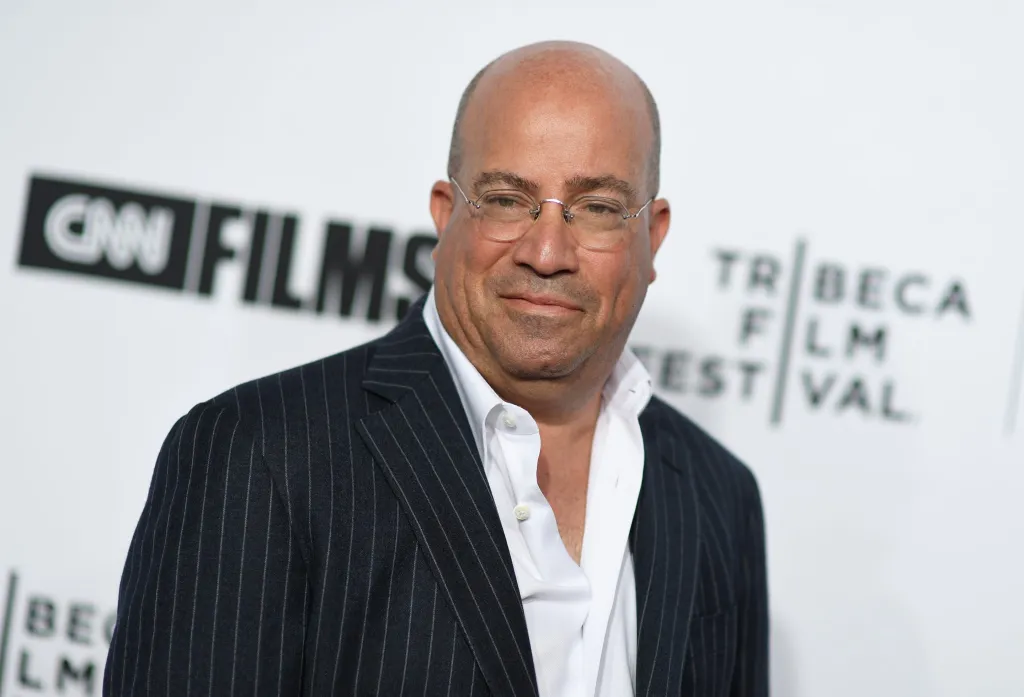
The landscape of global media production has shifted significantly with the recent $8 billion merger of Banijay and All3Media, a deal that establishes the combined entity, Banijay Entertainment, as the world’s largest independent production company. This consolidation spans 25 countries and integrates over 170 production and live-events companies, positioning it as a formidable force in content creation. At the center of this pivotal transaction is Jeff Zucker, who will now serve as chairman of the newly formed Banijay Entertainment. His insights into the financial backing that facilitated this merger, particularly from the United Arab Emirates, offer a glimpse into the evolving dynamics of international investment in media.
Zucker, in his capacity as CEO of RedBird IMI, a joint venture between New York-headquartered RedBird Capital Partners and Abu Dhabi’s International Media Investments, played a crucial role in orchestrating the deal. RedBird IMI had previously acquired All3Media for £1.15 billion ($1.5 billion) in early 2024, marking what was then its largest acquisition. His perspective highlights the UAE as a particularly compelling financial partner in the media sector. He characterized the UAE as “a fantastic investor” and a “great shareholder,” noting their keen interest in media, patience with investments, and willingness to embrace global opportunities. This combination, he suggested, is ideal for those seeking capital in the media industry.
Beyond the immediate financial implications, Zucker sees considerable growth potential within the UAE itself. He articulated a vision for leveraging the region’s untapped narratives, stating that a “tremendous number of stories from the region have yet to be told, particularly in the UAE.” Banijay already has several productions underway in the country, and these are expected to continue. The focus extends beyond traditional content, with live events and experiences identified as significant growth avenues for Banijay in the coming years. This includes opportunities stemming from major regional sporting events, such as Saudi Arabia’s hosting of the FIFA World Cup in 2034. The company has a track record in large-scale live productions, including the opening ceremonies for the Milano Cortina Winter Olympics and the FIFA World Cup across the U.S., Mexico, and Canada.
The expansion strategy also encompasses gaming and immersive entertainment, areas where Gulf countries are making substantial investments. Both Saudi Arabia and the UAE are actively transforming into lucrative hubs for video games and esports, driven by multi-billion-dollar commitments. This aligns with Banijay’s ambitions to extend its brands into these interactive sectors. The strategic alignment between Banijay’s growth objectives and the investment priorities of the Gulf nations suggests a symbiotic relationship, where capital meets opportunity.
However, the path for RedBird IMI in its dealings with the UAE has not been without its complexities. A notable instance involved the abandonment of RedBird IMI’s £500 million ($666 million) bid for The Telegraph, a British daily newspaper, in November 2025. This decision followed political opposition and new U.K. regulations restricting foreign state ownership in media companies, which would have seen Abu Dhabi-based IMI taking a 15% stake in Telegraph Media Group. This episode underscores the regulatory hurdles that can emerge in cross-border media acquisitions, even with robust financial backing. Despite this past challenge, the successful formation of Banijay Entertainment with significant UAE involvement signals a continued and deepening partnership in the global media landscape.