
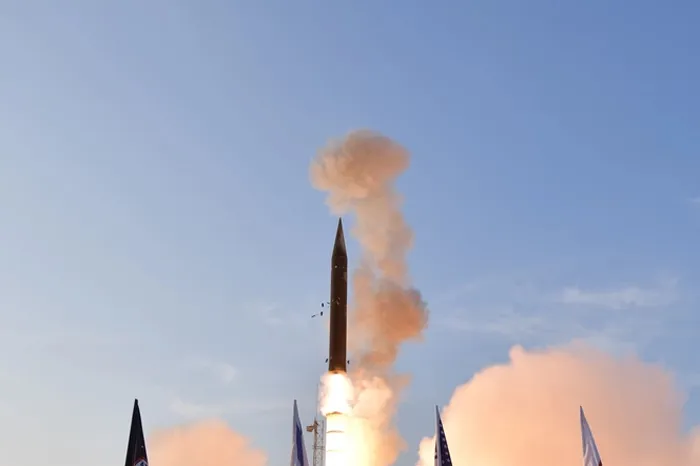
Israel is preparing to close a historic $4.2 billion missile-defense agreement with Germany, marking one of the largest defense export deals in Israeli history and a pivotal moment in European missile-defense modernization. The agreement centers on the Arrow 3 long-range anti-ballistic missile system, a jointly developed U.S.–Israeli technology considered one of the world’s most advanced interceptors designed to counter high-altitude, exo-atmospheric threats.
For Germany, the acquisition forms the backbone of a broader strategy to strengthen air and missile defenses across Europe, particularly as NATO allies reassess regional security vulnerabilities following Russia’s invasion of Ukraine. For Israel, the deal underscores its emergence as a global leader in missile-defense technologies and deepens an already close defense partnership with the United States—whose approval is required for the export.
A Strategic Milestone for Both Nations
The Arrow 3 deal represents a convergence of strategic incentives:
For Germany:
- The system will significantly improve Germany’s defensive posture against long-range missile threats.
- It represents a key pillar of the proposed “European Sky Shield Initiative” (ESSI), in which Germany plays a leading role.
- Berlin’s defense modernization efforts, fueled by its €100 billion defense investment fund, prioritize rapid acquisition of tested, high-performance systems.
For Israel:
- The agreement is one of the largest defense export contracts ever signed by the country.
- It reinforces Israel’s reputation as a major contributor to global missile-defense capabilities.
- It strengthens political and defense ties with a core European power.
What Makes Arrow 3 Unique
The Arrow 3 interceptor is jointly designed by Israel Aerospace Industries (IAI) and the U.S. Missile Defense Agency. It is engineered to intercept ballistic missiles outside the Earth’s atmosphere, destroying incoming threats in space before reentry.
Key capabilities include:
- Exo-atmospheric interception at extreme altitudes
- Hit-to-kill kinetic destruction (no explosive warhead)
- Capability against long-range and unconventional warheads
- High-speed maneuverability and mid-course guidance
- Multi-layer integration with Israel’s Iron Dome and David’s Sling systems
In operational scenarios, Arrow 3 serves as Israel’s highest-tier defense shield, complementing its multi-layer missile-defense structure.
Why Germany Chose Arrow 3
Germany evaluated multiple missile-defense options before selecting Arrow 3. Several strategic and technical factors drove the decision:
1. Speed of Deployment
Germany requires a system that can be delivered, integrated, and operational quickly—Arrow 3 meets these timelines due to its maturity and proven performance.
2. Long-Range Protection
Arrow 3 offers coverage against threats beyond Germany’s borders, providing defense for surrounding European allies as well.
3. Compatibility with NATO Objectives
The system enhances Europe’s collective defense while complementing existing NATO missile-defense assets.
4. Reliability and Combat-Ready Technology
Israel’s multi-decade experience with missile attacks provides a real-world validation that few systems can match.
5. Strategic Partnership
Germany and Israel have maintained deep security ties for decades; the Arrow 3 deal reinforces this alignment.
U.S. Approval: A Central Component
Because Arrow 3 was co-developed with U.S. funding, Washington’s approval was required before any export could proceed. The Biden administration endorsed the deal in 2023, citing:
- Strong support for NATO missile-defense enhancements
- Strategic alignment with Germany
- The importance of strengthening European deterrence
- Confidence in Israel’s export controls and technology security
The approval marked one of the largest U.S.-authorized foreign military sales involving Israeli-developed systems.
Production, Delivery, and Deployment Timeline
Under current frameworks:
- Initial system components are expected to be delivered by 2025–2026.
- Full operational integration will occur by 2028–2030.
- Israeli defense industries, including IAI, will expand production capacity to meet Germany’s demand.
- The deal includes radar systems, launch batteries, interceptors, command-and-control software, and long-term maintenance packages.
Germany plans to position Arrow 3 sites strategically across the country to maximize continental coverage.
Arrow 3 as Part of Europe’s New Defense Architecture
Germany’s acquisition plays a central role in the European Sky Shield Initiative, an ambitious NATO-aligned project involving 19 European nations aiming to:
- Build a multi-layer continental air-defense network
- Integrate long-, medium-, and short-range interceptors
- Reduce reliance on fragmented national systems
- Accelerate procurement amid rising threat levels in Europe
Arrow 3 will form the highest defensive layer of this architecture, complementing U.S. Patriots and German IRIS-T systems.
Economic and Industrial Impact
The deal carries significant economic implications:
For Israel:
- Strengthens its position among the top global exporters of advanced defense technology
- Funds further R&D in next-generation air and missile defenses
- Expands production capacity and supports thousands of high-tech jobs
For Germany:
- Accelerates modernization of the Bundeswehr
- Boosts domestic defense ecosystem through local maintenance and integration contracts
- Positions Germany as a central hub for European missile-defense coordination
Geopolitical Significance
The agreement has ramifications far beyond bilateral relations:
- Signal to Russia: Europe is strengthening long-range defensive capabilities in response to new threat assessments.
- Signal to NATO: Germany is taking a leading role in alliance defense modernization.
- Signal to the Middle East: Israel’s missile-defense technologies are now part of broader global defense frameworks.
- Signal to Asia and emerging markets: Israeli technology remains a global benchmark for strategic defense procurement.
Challenges and Criticisms
Despite its strategic importance, the deal has attracted debate:
Cost Concerns
The €4 billion price tag is substantial, even within Germany’s special defense fund.
Dependence on non-EU technology
Some European nations argue for greater reliance on EU-developed systems.
Operational Integration
Aligning Arrow 3 with NATO command-and-control systems requires complex technical planning.
Production Pressure
Israel’s defense industries must scale rapidly while meeting domestic security demands.
Still, supporters argue the deal is essential given the rapidly evolving threat environment in Europe.
Conclusion: A Defining Moment in Israel–Germany Defense Relations
The closing of the $4.2 billion Arrow 3 missile-defense deal represents a milestone in global defense cooperation. For Germany, it is a major step toward building a modern, multi-layer air-defense shield capable of addressing 21st-century threats. For Israel, it is a historic export achievement and a strategic affirmation of its global leadership in missile-defense innovation.
As geopolitical tensions continue to reshape global security priorities, the Arrow 3 agreement stands as a defining example of how nations are adapting—through advanced technology, strategic partnerships, and accelerated modernization—to an increasingly uncertain world.