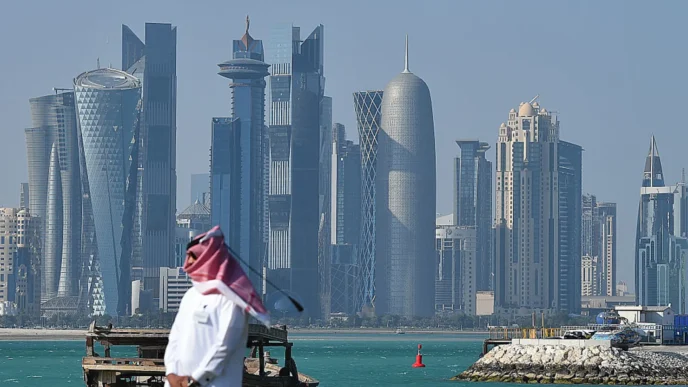

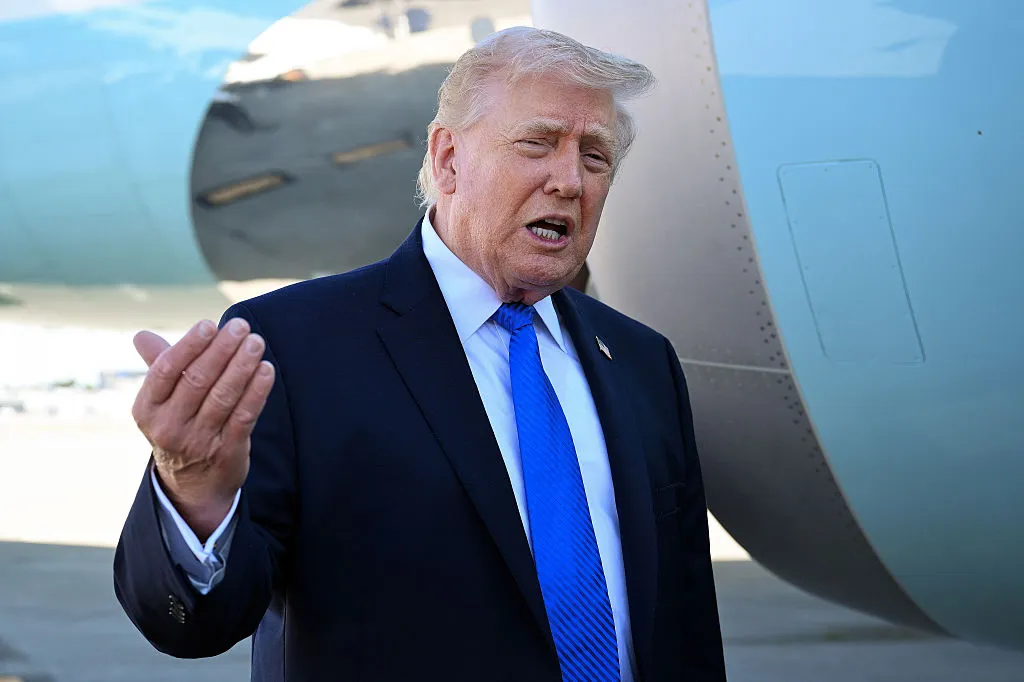
The 2018 declaration by Donald Trump, asserting that Gulf monarchies might not exist for “two weeks without us,” offered a stark redefinition of the long-standing strategic partnership between the United States and Arab nations in the Persian Gulf. This transactional perspective, a departure from the security cornerstone these states had come to expect, set a new tone for the relationship, which has now been further complicated by the recent US-Iran agreement.
A year after Trump’s initial remarks, Saudi Arabia experienced a significant attack on its oil facilities, temporarily halving its crude production. While Washington attributed the strikes to Iran, the incident left Gulf nations questioning the extent of American willingness to confront Tehran on their behalf. This uncertainty has only deepened with the recent war between the US and Israel against Iran, a conflict that triggered widespread retaliatory attacks across the Gulf, forcing regional governments to once again scrutinize the efficacy of American protection.
US Secretary of State Marco Rubio’s recent visit to the United Arab Emirates, Kuwait, and Bahrain underscores the delicate nature of these relationships. His mission is to reassure Gulf states that Washington’s security commitments remain firm, despite a new agreement with Iran that many in the region view with apprehension. For these nations, the central question has shifted from whether the US is committed to their security, to whether the emerging pact with Tehran leaves them in a more vulnerable position than before the conflict. Hasan Alhasan, a senior fellow at the International Institute for Strategic Studies, suggests this agreement is indicative of a broader US retrenchment from the region, potentially emboldening Tehran through the influx of financial and economic resources.
Gulf states, despite their reservations, facilitated and supported the US-Iran ceasefire. For them, a flawed agreement is still preferable to continued warfare. However, the details of this pact are particularly concerning. Unlike the 2015 Iran nuclear agreement, which Gulf states opposed and cheered Trump for dismantling in 2018, the current accord not only fails to address their traditional concerns but also introduces new challenges. A senior Gulf diplomat noted that the recent conflict demonstrated Iran’s “well-developed plan to target” Gulf states. A key provision of the new agreement grants Tehran a formal role, alongside Oman, in overseeing commercial traffic through the Strait of Hormuz. This means a significant portion of Gulf states’ maritime trade, including their crucial energy exports, could fall under Iranian oversight.
Furthermore, the pact sidesteps Iran’s missile program and its network of proxy militant groups, issues that many Gulf states consider more pressing than Tehran’s nuclear activities. While Rubio stated in Kuwait that the US would be “completely aligned with our partners in the Gulf” on Iran’s missile program, Trump appeared to downplay the issue last week, suggesting Iran was justified in possessing missiles if Saudi Arabia did. The agreement also includes a $300 billion reconstruction fund for Iran, with Trump committing Gulf funding to the initiative. However, there is little evidence that Gulf states have reciprocated this commitment, with Saudi Arabia stating it has “no details” and Qatar expressing interest without formal sign-on. Rubio has indicated he will not be seeking monetary contributions for this fund during his current tour, deeming it “far down the road.”
Despite these anxieties, Gulf states acknowledge their limited alternatives to the US as their primary security partner. Even as the perceived US security role diminishes, economic ties remain strong, exemplified by nations like the UAE pledging to “double down” on their relationship with the United States. However, some Gulf states are already exploring options for diversifying their military procurement, with Turkey emerging as an alternative arms supplier. The war has also prompted Gulf leaders to seriously consider a long-term accommodation with Iran, recognizing a potential future where Washington plays a significantly reduced role in regional security. A regional non-aggression pact with Iran is one framework being contemplated, though the challenge of persuading Tehran to enter such an arrangement remains.
Analysts caution that diplomacy alone may not provide the security assurances Gulf states seek. Alhasan believes a non-aggression pact is unlikely to alter Iran’s strategic calculus without a credible Arab Gulf deterrence capability. Gulf states, he argues, must first establish the necessary strategic conditions to incentivize Iran through enhanced and integrated defense and robust resilience measures. This evolving dynamic signals a fundamental shift in the regional security landscape, with Gulf nations grappling with diminished confidence in US security guarantees and the imperative to forge new pathways for their own protection and stability.