
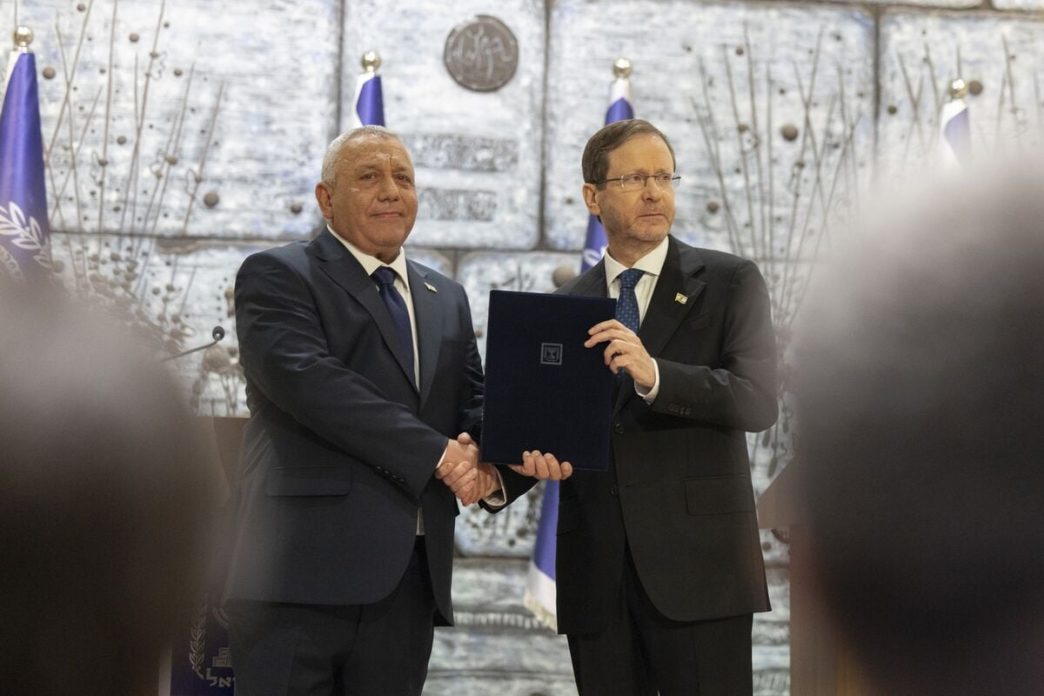
Israeli President Isaac Herzog has handed former military chief Gadi Eisenkot the mandate to form the country’s next government, setting up a high-stakes political test against Benjamin Netanyahu, the long-serving prime minister who still controls the largest right-wing bloc.
Eisenkot secured the backing of 67 members of the newly elected Knesset, compared with 46 for Netanyahu, giving him the formal right to try to assemble a coalition. The numbers reflect broad opposition to another Netanyahu term, but they also hide deep ideological divisions among the parties that supported Eisenkot.
A divided opposition
The parties behind Eisenkot range from centre-left Zionists to Arab factions that have never sat in an Israeli government. Some want to end the war in Gaza and restart talks with the Palestinians. Others focus on domestic issues such as the cost of living, military service exemptions for ultra-Orthodox Jews, and the independence of the judiciary.
Finding enough common ground to govern will require painful compromises. On security policy alone, the gaps are wide. Arab parties generally oppose the ongoing military campaign in Gaza and would resist measures they see as deepening the occupation. Centrist and right-leaning opposition parties want a tough stance on security but differ on how to handle relations with the Palestinians and the future of settlements.
Netanyahu’s advantage
Netanyahu’s bloc is smaller in raw numbers but more cohesive. Likud, together with ultra-Orthodox and nationalist religious parties, has a shared interest in keeping him in power and a long record of sticking together under pressure. The former prime minister is also one of Israel’s most skilled negotiators, with decades of experience peeling off wavering lawmakers and exploiting divisions among his rivals.
His camp has already begun to argue that a government supported by Arab parties would be illegitimate and dangerous, a line that has worked in past elections to spook centre-right voters. If Eisenkot moves too close to the Arab parties to secure a majority, he risks losing more conservative backers. If he keeps them at arm’s length, he may not reach the 61 seats needed.
Eisenkot’s profile
Eisenkot is a former chief of staff of the Israel Defense Forces and a member of the National Unity party led by Benny Gantz. He entered politics after a long military career and is seen as a security-minded centrist with limited appetite for Netanyahu’s populist style. His reputation for competence and restraint helped him attract support from across the political spectrum, but it does not guarantee he can manage the contradictions within that support.
He is not a natural politician in the Netanyahu mould. Where Netanyahu thrives on confrontation and surprise, Eisenkot projects calm and consensus. In normal times that might be an asset. In a parliament as fragmented as the current Knesset, it could leave him exposed to pressure from every flank.
The clock is running
Israeli law gives a prime minister-designate a limited period to present a coalition to the Knesset. If Eisenkot fails, Herzog could turn to another candidate or Israel could be pushed toward yet another election, the fourth in just over two years. Each round of voting has deepened voter fatigue and political instability.
The timeline is complicated by the continuing war in Gaza and tensions on the northern border with Hezbollah. A caretaker or weak government would struggle to make the difficult decisions those conflicts require, and Israel's allies have made clear they want a stable leadership in Jerusalem.
What comes next
Eisenkot's first task will be to hold talks with each potential coalition partner and identify the minimum programme they can agree on. That will almost certainly include economic measures, a commitment to restore some checks on the executive branch, and a vague promise to pursue security without ruling out diplomatic options.
Whether that is enough to hold a government together remains doubtful. Netanyahu has been written off before and has always found a way back. For Eisenkot, the math is formal but the politics is brutal. The coming weeks will determine whether Israel gets a new government or another chapter in one of the longest political dramas in its history.