
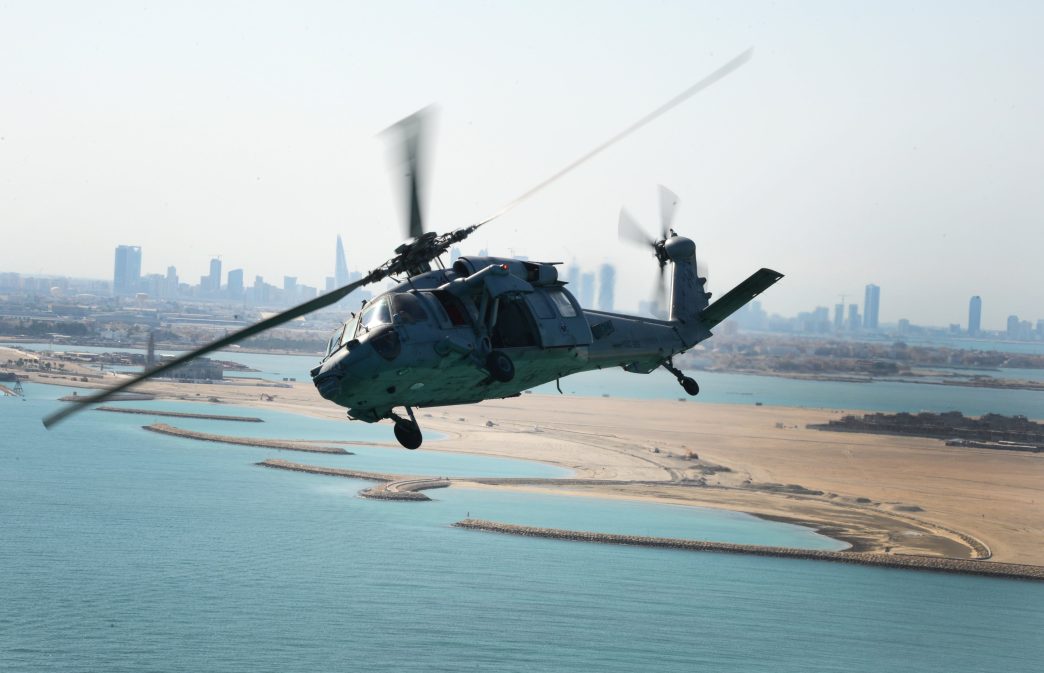
Iran’s Islamic Revolutionary Guard Corps struck a military base in Bahrain on Sunday, the first direct attack on the Gulf state in weeks, even as a senior Iranian leader insisted that a path to ending the conflict with the United States remains open.
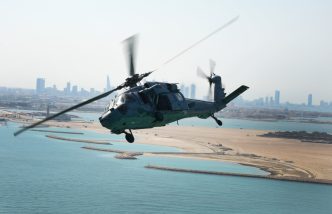
The IRGC said it launched six drones at the Riffa helicopter base, calling the attack a response to the “blatant aggression of the US military.” Bahrain’s military said it intercepted several Iranian aerial attacks and destroyed the projectiles, while the IRGC reported a “successful impact.” The conflicting accounts could not be independently verified.
First Bahrain strike since September
The attack was the first on Bahrain since early September, when Iranian drones also targeted a US base in the United Arab Emirates. The strikes come after a relative lull in direct Iranian operations against Gulf Cooperation Council states, even as tensions over shipping in the Strait of Hormuz have continued.
Bahrain hosts the US Navy’s Fifth Fleet headquarters and other American military facilities, making it a symbolic and strategic target. The kingdom has been a close US security partner for decades and has backed American operations in the region.
Tehran leaves the door open
Despite the strike, Iranian Parliament Speaker Mohammad Bagher Ghalibaf said the path to ending the nine-month conflict was open if Washington accepts Iran’s “logical conditions.” Ghalibaf, who has been a senior negotiator in talks with the US, spoke through the semi-official Fars news agency.
He warned, however, that Tehran would not remain indefinitely in a state of “neither war nor peace.” If Washington resumes strikes, he said, Iran’s armed forces would “determine the geography of battle.”
Trump’s mixed signals
The attack came after US President Donald Trump said over the weekend that he was considering holding off on attacking Iran absent new provocations, according to Reuters. The comment had raised hopes of a de-escalation, but the Bahrain strike showed that Iran is still willing to carry out direct military action even while talking about diplomacy.
The two sides remain far apart on the core issues. Iran wants an end to the US naval blockade, sanctions relief, the release of frozen assets and a halt to hostilities. Washington has demanded that Iran curb its nuclear programme and stop threatening shipping lanes in the Strait of Hormuz, where Iranian state media report near-daily incidents of vessels hitting naval mines.
Regional impact
During the opening phase of the war, which began when the US and Israel launched strikes on Iran in late February, Tehran fired thousands of drones and missiles at American allies across the region. Targets included the United Arab Emirates, Bahrain, Saudi Arabia, Qatar, Kuwait, Jordan, Oman and Iraq.
Since then, the conflict has moved through cycles of escalation and negotiation. The Bahrain strike suggests that Iran retains the capacity and willingness to strike US partners directly, even as it seeks leverage for a broader settlement.
What's next
The attack is likely to test Trump's stated willingness to hold fire. If the US responds with strikes of its own, the conflict could widen again. If Washington treats the attack as a limited signal, diplomatic channels may stay open.
For now, Iran is pursuing both tracks at once: showing it can hit American allies while saying it would prefer a deal. The question is whether either side is prepared to pay the price the other is demanding.