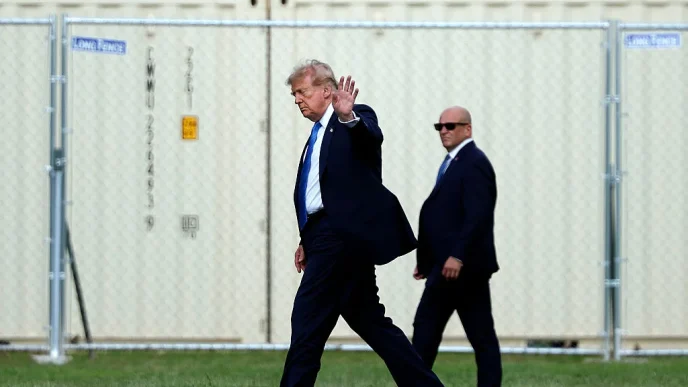


Three days ago, a casual remark from US President Donald Trump reignited a familiar geopolitical flashpoint, prompting an immediate and pointed rebuttal from Tehran. Trump, speaking in New York, suggested that the critical Strait of Hormuz would soon be declared “a territory of the United States” once Iran was “defeated.” This assertion, delivered with a chuckle, quickly drew a sharp response from Iranian officials who maintain unwavering control over the vital waterway.
The Strait of Hormuz, a narrow passage connecting the Persian Gulf to the Gulf of Oman and the Arabian Sea, remains a significant chokepoint for global energy supplies. Approximately a quarter of the world’s seaborne oil trade typically transits through these waters, making its status a matter of international economic and strategic concern. Iranian Deputy Foreign Minister for legal and international affairs, Kazem Gharibabadi, wasted no time in countering Trump’s statement. Writing on social media, Gharibabadi emphasized that the Strait “has been Iranian, is Iranian, and will remain Iranian,” adding that its closure and opening would solely be under Iran’s command. He further stated that Iran would continue to enforce its blockade as long as the US failed to “accept the reality of defeat” and abandon its “fanciful delusions.”
This latest exchange underscores the persistent instability surrounding the Strait, a region that has seen repeated flare-ups between Washington and Tehran. The current blockade by Iran follows a renewed period of heightened tensions that began in late February with the outbreak of what the source describes as the “Iran war.” A provisional “memorandum of understanding” reached in June had offered a brief glimmer of hope for de-escalation, outlining terms for both sides. Under that agreement, Iran was expected to reopen the waterway and reaffirm its commitment against procuring or developing nuclear weapons. In return, the United States had pledged to lift its naval blockade and remove sanctions on Tehran. The understanding provided a 60-day window for the two nations to negotiate a more comprehensive, final deal.
However, the fragile peace efforts quickly unraveled. Just last July, Iranian attacks on shipping within the Strait prompted a fresh wave of US retaliatory strikes and the re-imposition of a naval blockade on Iranian ports. This cycle of aggression and counter-aggression has effectively stalled any progress towards a lasting resolution, leaving the fate of the Strait of Hormuz, and indeed broader regional stability, hanging precariously. The latest verbal volley from both leaders does little to assuage concerns about the potential for further escalation in one of the world’s most sensitive maritime corridors.